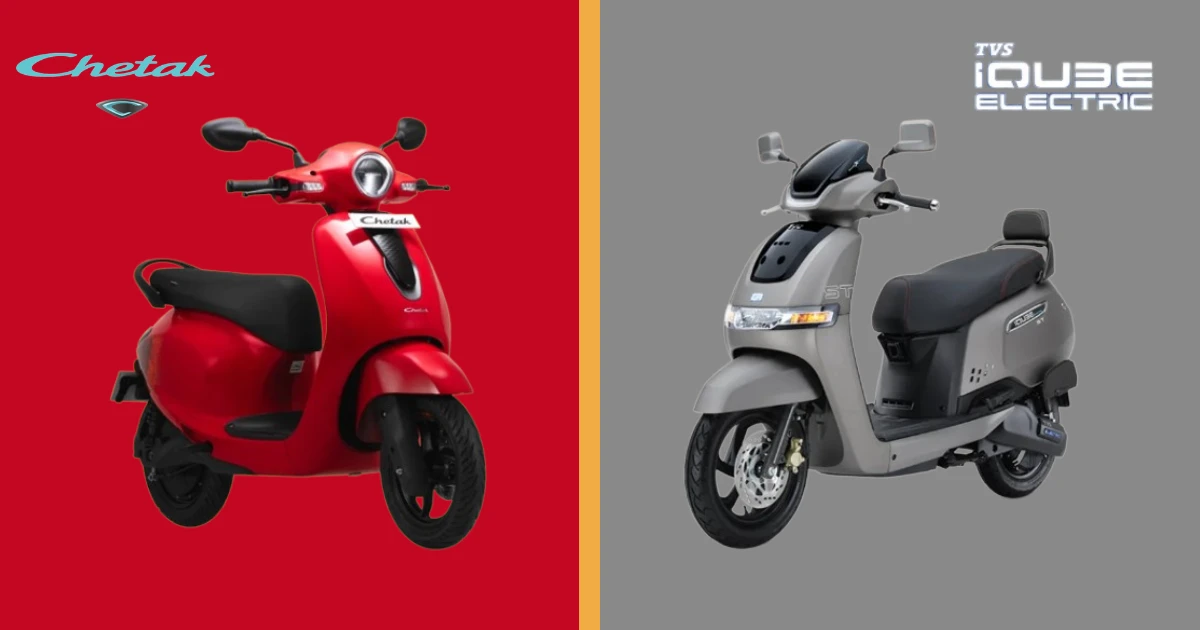
Bajaj Chetak vs TVS iQube 2026, Which Electric Scooter is Better in India?
The Indian electric scooter market is no longer a playground for startups; the “big boys” have truly arrived. If you are looking for an electric commuter that balances brand legacy with modern tech, two names inevitably top the list: the Bajaj Chetak and the TVS iQube.
Both scooters have evolved significantly for 2026, offering multiple battery sizes and feature packs. But which one fits your lifestyle? As an auto journalist who has seen these machines evolve from prototypes to silent street staples, here is the ultimate breakdown to help you decide.
Design and Build Metal vs. Modernity
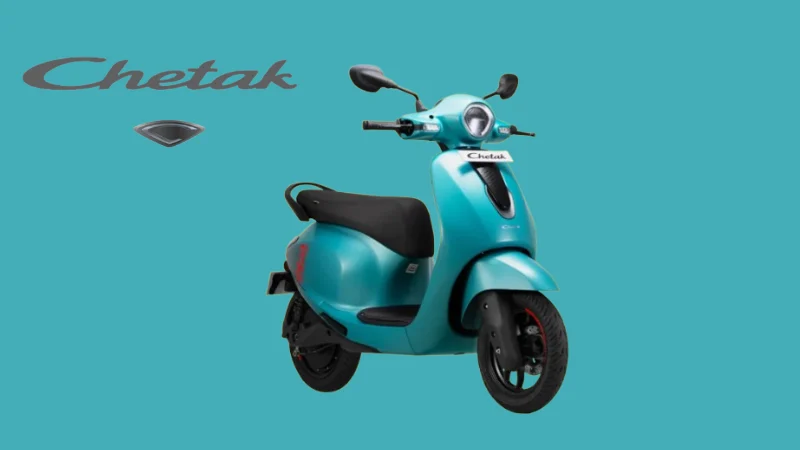
The first thing you notice is the “vibe.” The Bajaj Chetak is the undisputed king of build quality in the EV segment. It retains its iconic, neo classical retro design wrapped in a robust all-metal body. When you knock on the side panels of a Chetak, it sounds solid not hollow like the plastic heavy rivals. For 2026, the new C2501 variant adds distinctive decals to this timeless form, keeping it fresh for a younger audience.
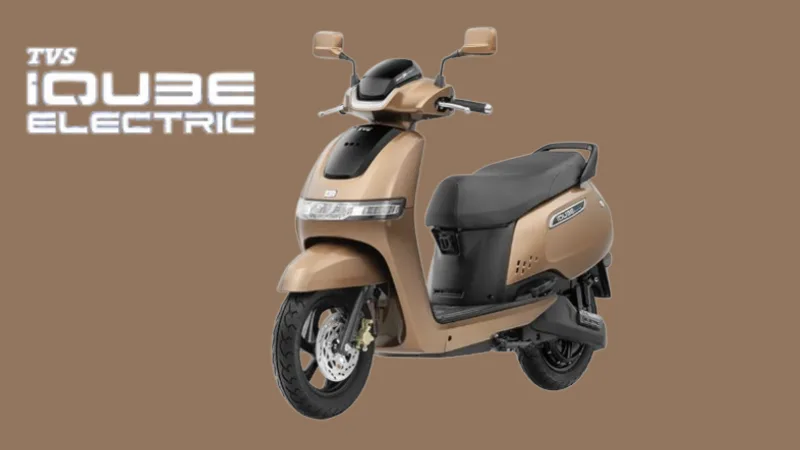
The TVS iQube, on the other hand, embraces a more contemporary, functional aesthetic. It looks like a “regular” scooter, which many users appreciate because it doesn’t scream for attention. While it uses high quality plastics and features a tubular structure, it feels premium in its own right with a large, flat floorboard and a wide, comfortable seat.
The Journalist’s Take: If you want a scooter that feels like a “proper” machine and ages gracefully, the Chetak’s metal body wins. If you prefer a clean, modern look that blends into traffic, the iQube is your pick.
Performance and Range: The Numbers Game
This is where the competition gets fierce. Both brands have expanded their line-ups to offer everything from budget city-slickers to long-range tourers.
Bajaj Chetak
The Chetak line-up now ranges from the entry-level C2501 (113 km range) to the top-spec 3501.
- Top Speed: Most variants are capped at 63–73 km/h, making it strictly an urban commuter.
- Max Range: The 3501 and 3502 variants offer a claimed 153 km of range.
- Charging: The 3001 variant takes about 3.5 hours for a 0–80% charge.
TVS iQube
TVS has pushed the boundaries further with the iQube ST.
- Top Speed: The iQube is generally faster, with variants hitting 75 km/h to 82 km/h.
- Max Range: The iQube ST 5.3 kWh is the range monster here, boasting a massive 212 km IDC range.
- Charging: The base 2.2 kWh model is a quick charger, hitting 0–80% in just 2 hours 45 minutes.
The Journalist’s Take: For highway stretches or longer commutes, the iQube’s higher top speed and the ST’s massive range give it a clear edge. The Chetak is perfectly tuned for city stop and go traffic but feels slightly restricted on open roads.
ALSO READ: New Bajaj Chetak C25 Launched In India, Affordable Electric Scooter With 113 Km Range
Technology and Features: Smart vs. Sturdy
Both scooters are packed with tech, but they prioritize different things.
The TVS iQube is a gadget lover’s dream. Its SmartXonnect system offers a vibrant TFT touch screen (on higher variants), turn-by-turn navigation, call/SMS alerts, and even social media notifications. It even has a dedicated Relationship Manager assigned to every customer.
The Bajaj Chetak isn’t far behind but focuses on “utility tech.” You get a crisp LCD or TFT display (depending on the variant), Hill Hold Assist, and an incredibly useful Reverse Mode with parking assist. A standout feature for the Chetak is its massive 35-litre under-seat storage in the 3001 variant, which is class-leading and perfect for carrying a laptop or documents. The iQube offers a respectable 32 litres, which can fit two half-face helmets.
Real-World Ownership: What the Riders Say
Sources indicate a mix of high praise and growing pains for both.
- Chetak Owners love the silent, smooth ride and the “old-school” brand trust. However, some have reported sensor errors and disappointing service experiences when technical glitches arise.
- iQube Owners rave about the instant acceleration and the effectiveness of the regenerative braking. The common complaint? TVS service centres often struggle to keep up with the tech, with some users reporting long wait times for repairs.
Bajaj Chetak EMI Options
For the Bajaj Chetak line-up, financing is designed to lower the barrier to entry with the following highlights:
- Starting EMI: Monthly payments for the Chetak can start as low as ₹3,689. Specifically, the entry-level Chetak C2501 variant is advertised with an EMI starting at ₹2,731 per month.
- Interest Rates: Financing is available at a competitive rate of interest starting at 6.99%.
- Loan Terms: Buyers can opt for a tenure of up to 60 months.
- Processing & Downpayment: Bajaj offers schemes with zero processing fees and down payments starting at ₹0, allowing you to ride home a new scooter with minimal upfront costs.
ALSO READ: TVS Apache RTX 300 Review 2026, Price Rs 1.99 Lakh, Features, Full Details of Adventure Bike
TVS iQube EMI Options
TVS provides a highly flexible “Smart Finance” ecosystem for the iQube, often focusing on the “Effective EMI” (actual EMI minus monthly petrol savings):
- Starting EMI: Various variants, including the base iQube 2.2 kWh and the top-spec iQube ST 5.3 kWh, are listed with starting EMIs from ₹1,899 per month. The average EMI for the base model is also cited at approximately ₹3,750 per month.
- Battery-as-a-Service (BaaS): A unique scheme launched in 2026 allows buyers to lower the upfront cost significantly by paying for the battery separately, with prices starting as low as ₹839 per month.
- Interest Rates & Tenure: Interest rates start as low as 6%, with flexible tenure options ranging from 12 to 60 months.
- Exclusive Discounts: TVS offers a 5% discount (up to ₹7,500) on HDFC Bank credit card EMIs.
- Effective Savings: TVS highlights that because the running cost is only ₹0.18/km compared to ₹2/km for petrol, the monthly savings (approx. ₹1,631 for a 30km daily commute) can effectively reduce your financial burden.
Both manufacturers recommend visiting authorized dealerships for the “Lowest EMI” and location-specific exchange benefits, which can further reduce the total loan amount
Price and Value: The Bottom Line
Pricing is aggressive as both manufacturers vie for the “Family EV” crown.
- Entry Level: The Chetak C2501 starts at approximately ₹89,500 (ex-showroom Bengaluru). The iQube 2.2 kWh starts slightly higher at around ₹94,434.
- Mid-to-High Range: The Chetak 3501 climbs to ₹1,39,603. Meanwhile, the top of the line iQube ST 5.3 kWh can reach ₹1,62,314, reflecting its massive battery capacity.
The running costs for both are incredibly low estimated at just ₹0.18 to ₹0.24 per km, which means the scooter can practically pay for itself over three years compared to a petrol equivalent.
Final Verdict
Choose the Bajaj Chetak if: You value durability and build quality above all else. Its all-metal body and retro-chic styling make it a statement piece that feels built to last for decades.
Choose the TVS iQube if: You want the best-in-class technology, a slightly higher top speed, and the option for massive range. It’s the better choice for the tech-savvy commuter who wants a “smart” companion for the road.
In the end, both represent the pinnacle of Indian engineering. Whether you go with the “Gold Standard” of build (Chetak) or the “Smart Choice” for tech (iQube), you are stepping into a cleaner, quieter future.
Bajaj Chetak vs TVS iQube FAQs
Which is better, Bajaj Chetak or TVS iQube in 2026?
Bajaj Chetak is better for build quality and durability, while TVS iQube offers more features, better performance, and higher range options. Your choice depends on whether you prefer a solid build or smart technology.
What is the real-world range of Chetak vs iQube?
Bajaj Chetak offers around 100 to 130 km in real-world usage, while TVS iQube can deliver between 100 to 180 km depending on the variant and riding conditions.
Which electric scooter has more features, Chetak or iQube?
TVS iQube comes with more advanced features like a touchscreen display, navigation, and connected tech, whereas Chetak focuses more on practical features like reverse mode and storage.
Is Bajaj Chetak more durable than TVS iQube?
Yes, Bajaj Chetak has an all-metal body, which generally makes it feel more solid and durable compared to the plastic body used in TVS iQube.
Which EV scooter is better for daily city use?
Both are good for city use, but Bajaj Chetak is more comfortable for short daily rides, while TVS iQube is better if you want extra range and performance for longer commutes.