The BMW X5 has long been one of the most well-rounded luxury SUVs, offering a strong combination of performance, comfort, technology and premium road manners. However, BMW is now taking the X5 into a completely new era with the upcoming fifth-generation model. This makes the 2026 BMW X5 vs 2027 BMW X5 comparison particularly interesting for buyers who are deciding whether to purchase the outgoing model or wait for the new one.
The 2026 BMW X5 belongs to the fourth-generation G05 family, while the 2027 model is based on the new G65 generation. Unlike a normal facelift, the new X5 brings major changes to its styling, interior, technology and powertrain lineup.
So, is the newer X5 automatically the better choice? Or does the outgoing model still have enough advantages to make it worth considering? Here is a detailed 2026 BMW X5 vs 2027 BMW X5 comparison covering design, performance, interior, technology, practicality and pricing.
Design: From the Familiar X5 Look to BMW’s Futuristic New Direction
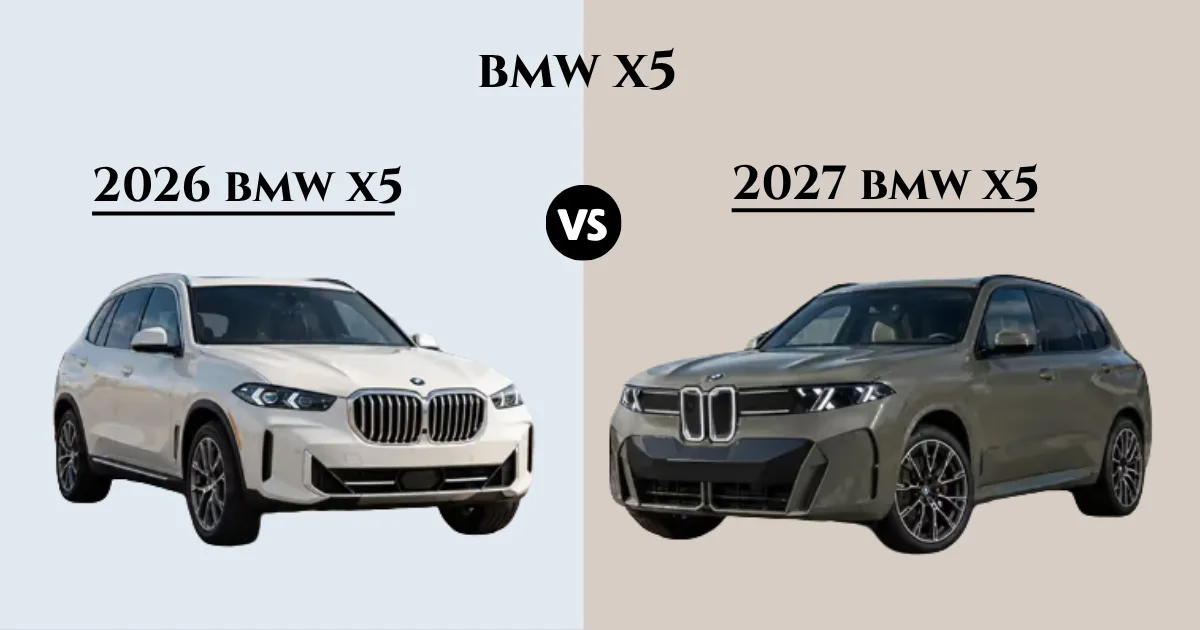
The exterior is arguably the biggest difference between the two generations. The 2026 BMW X5 continues with the familiar styling language that has made the model instantly recognizable.
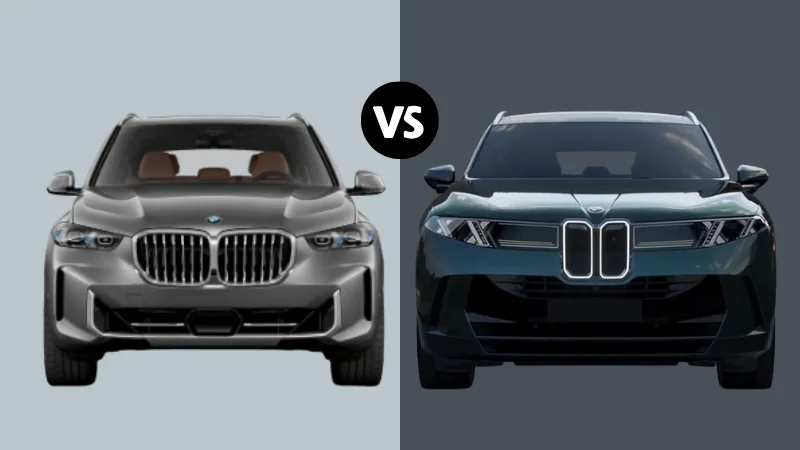
The G05 features muscular bodywork, pronounced fenders, a sporty front fascia and BMW’s traditional kidney grille. Following its latest facelift, the outgoing X5 still looks modern and premium without appearing overly futuristic.
The 2027 BMW X5 takes a much more dramatic approach. The new G65 adopts BMW’s latest Neue Klasse design language, with styling influences from the new-generation iX3. The front grille is slimmer and vertically positioned, while the hood has a taller appearance.
The headlights and taillights are also completely redesigned. BMW has introduced distinctive X-inspired lighting elements that give the SUV a more futuristic identity.
Another major change is the removal of traditional exterior door handles. The new X5 can also be equipped with wheels measuring up to 23 inches, giving it a more imposing stance.
The wheelbase has grown by 2.4 inches, which should improve rear-seat space and overall practicality.
From a styling perspective, the 2026 BMW X5 vs 2027 BMW X5 debate will largely depend on personal preference. The outgoing model has a more familiar BMW appearance, while the new one clearly focuses on futuristic design.
Powertrain and Performance
BMW has retained its popular 3.0-litre turbocharged inline-six engine for the new generation. However, the updated engine and turbocharger provide higher outputs.
The 2026 BMW X5 xDrive40i produces 375 hp and 398 lb-ft of torque. The 2027 BMW X5 40 xDrive increases output to 394 hp and 428 lb-ft.
2026 BMW X5 vs 2027 BMW X5: Engine Comparison
| Specification | 2026 BMW X5 xDrive40i | 2027 BMW X5 40 xDrive |
|---|---|---|
| Engine | 3.0L Turbo I6 | 3.0L Turbo I6 |
| Power | 375 hp | 394 hp |
| Torque | 398 lb-ft | 428 lb-ft |
| 0-60 mph | 5.2 seconds | 5.1 seconds |
| Drive Type | AWD | AWD |
| Transmission | 8-speed automatic | 8-speed automatic |
| City/Highway/Combined | 23/27/25 mpg | 24/28/26 mpg |
The numbers show a clear improvement for the new model. However, the acceleration difference is only 0.1 second, with the new X5 reaching 60 mph in 5.1 seconds compared with 5.2 seconds for the outgoing version.
That means the difference may not be particularly noticeable during normal everyday driving.
The new model is also slightly more efficient. Its updated B58 engine uses the Miller combustion cycle, helping improve fuel economy.
The 2026 BMW X5 vs 2027 BMW X5 powertrain comparison also becomes more interesting when future variants are considered. BMW has indicated that plug-in hybrid, V8, hydrogen and fully electric versions of the new X5 will arrive later.
BMW has also stated that the plug-in hybrid version will offer around 15% more all-electric range than the previous-generation equivalent.
ALSO READ: Triumph Speed 400 Price Cut: Now Rs 6,000 Cheaper, Tracker 400 Also Gets Rs 7,000 Off
Driving Experience and Suspension
The 2026 BMW X5 has already established a reputation for combining comfort with strong performance. Its quiet cabin, smooth ride and responsive powertrain make it suitable for both everyday driving and long-distance journeys.
The new model is expected to improve on this formula. BMW has highlighted a near 50:50 weight distribution and standard adaptive suspension for the new generation.
These changes could provide better body control and ride quality, although the exact difference will become clearer once the new X5 is widely available.
For buyers considering the 2026 BMW X5 vs 2027 BMW X5, performance alone may therefore not be enough to justify moving to the new generation. The outgoing model already delivers strong acceleration and refined road manners.
Interior and Technology
The cabin is where the difference between the two generations becomes even more obvious.
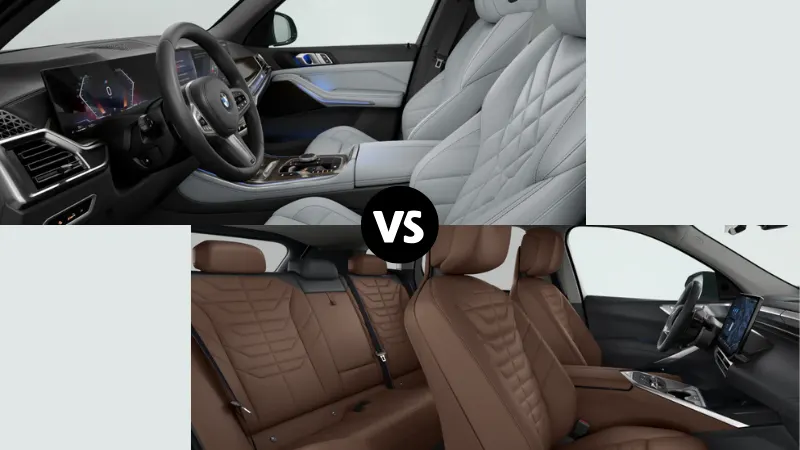
The 2026 BMW X5 features BMW’s more familiar interior setup, including a digital driver’s display, central touchscreen and physical iDrive controller. This arrangement provides a combination of digital technology and physical controls.
The 2027 BMW X5 moves much further into BMW’s software-focused future.
The new SUV gets a large 17.9-inch central touchscreen along with BMW’s Panoramic Vision display. This system places important driving information along the lower portion of the windscreen, allowing the driver to view key information without looking down at a conventional instrument cluster.
The physical iDrive controller has also been removed. As a result, drivers will rely much more heavily on touchscreen and digital controls.
The new BMW Operating System X further expands the software capabilities of the vehicle, including improved update and upgrade functionality.
For technology-focused buyers, this part of the 2026 BMW X5 vs 2027 BMW X5 comparison strongly highlights how different the two generations are.
The 2027 model can also be equipped with premium features such as automatic doors and an optional display for the front passenger.
However, the futuristic interior may not appeal to everyone. The unusual steering wheel and multiple screens could make the cabin feel more complicated compared with the familiar layout of the 2026 model.
ALSO READ: Kia Carens Clavis EV Battery Warranty Gets 15-Year Unlimited Km Cover
Space and Practicality
The new BMW X5 also receives a longer wheelbase, increasing overall cabin space.
With an additional 2.4 inches of wheelbase, rear passengers should benefit from improved legroom. This could be particularly useful for families and buyers who regularly carry adults in the second row.
The larger wheel options and redesigned body also give the new X5 a stronger road presence.
The 2026 model, however, remains a practical luxury SUV. Its cabin layout is familiar, and its dimensions already provide sufficient space for most everyday requirements.
Therefore, the 2026 BMW X5 vs 2027 BMW X5 practicality discussion is less about whether the outgoing model is spacious enough and more about whether the additional room of the new model matters to a particular buyer.
Pricing of 2026 BMW X5 vs 2027 BMW X5
Price is another important factor when comparing the two generations.
The 2026 BMW X5 most recently carried a starting price of $67,600 for the sDrive40i rear-wheel-drive version. The xDrive40i version started at $69,900.
The equivalent 2027 BMW X5 40 xDrive starts at $72,100.
That means the new model costs $2,200 more than the 2026 X5 xDrive40i.
The higher price comes with additional power, improved efficiency, more rear-seat space and a completely new technology package.
The 2026 BMW X5 vs 2027 BMW X5 price difference therefore isn’t enormous when considered alongside the number of changes introduced with the new generation.
The new X5 also competes with models such as the 2027 Mercedes-Benz GLE 450 4Matic, which starts at $74,800. Another alternative is the all-new Audi Q7, which starts at $70,900 and offers a powerful V6 engine.
Technology and Future Powertrain Options
One of the biggest long-term advantages of the 2027 X5 is the wider range of technologies and powertrains expected during its lifecycle.
The outgoing X5 already offers petrol, plug-in hybrid and V8 options depending on the market and variant. However, BMW plans to expand the new generation with fully electric and hydrogen-powered versions in the future.
This makes the new model more closely connected to BMW’s wider transition toward electrification and software-defined vehicles.
For buyers thinking beyond the initial launch version, the 2026 BMW X5 vs 2027 BMW X5 comparison therefore goes beyond today’s specifications.
The G65 is designed to remain relevant as BMW expands its electrified lineup, while the G05 represents a more established generation of the X5.
Pros and Cons of 2026 BMW X5 vs 2027 BMW X5
2026 BMW X5
Pros
- Familiar BMW styling
- Strong six-cylinder performance
- Comfortable and quiet cabin
- Physical iDrive controller
- Proven G05 platform
- Lower starting price
Cons
- Older technology compared with the new generation
- Less rear-seat space
- Lower power and efficiency figures
- Fewer future powertrain possibilities
2027 BMW X5
Pros
- Completely new exterior design
- More powerful six-cylinder engine
- Slightly better fuel economy
- Longer wheelbase
- New Panoramic Vision display
- BMW Operating System X
- More future powertrain choices
Cons
- Higher starting price
- More touchscreen-dependent interior
- Futuristic design may not appeal to everyone
- Some controls may take time to get used to
2026 BMW X5 vs 2027 BMW X5: Which One Should You Consider?
The final part of the 2026 BMW X5 vs 2027 BMW X5 comparison comes down to what type of luxury SUV experience a buyer wants.
The 2026 X5 is effectively the final version of BMW’s current-generation formula. It offers familiar styling, strong performance, a comfortable cabin and a proven technology layout.
It may appeal to buyers who prefer conventional BMW design and physical controls. Its lower starting price also provides an advantage, particularly if remaining inventory becomes available with attractive deals.
The 2027 BMW X5 is BMW’s next-generation interpretation of the luxury SUV. It brings a much more radical design, additional power, slightly better efficiency, more interior space and a significantly more digital cabin.
The 2026 BMW X5 vs 2027 BMW X5 decision is therefore not simply about which model has the bigger numbers. The two SUVs represent different approaches to the same luxury-SUV formula.
For buyers who prefer traditional BMW styling and a familiar driving environment, the 2026 X5 remains an interesting option. Those who want BMW’s newest design language, latest software and future-oriented technology may prefer waiting for the 2027 X5.
Ultimately, the 2026 BMW X5 vs 2027 BMW X5 comparison shows that the new generation brings meaningful changes, but the outgoing model still offers a strong combination of luxury, performance and everyday usability.
Frequently Asked Questions of 2026 BMW X5 vs 2027 BMW X5
Q1. Is the 2027 BMW X5 more powerful than the 2026 BMW X5?
A: Yes. The 2027 BMW X5 40 xDrive produces 394 hp and 428 lb-ft, compared with 375 hp and 398 lb-ft from the 2026 BMW X5 xDrive40i.
Q2. Does the 2027 BMW X5 Offer Better Acceleration Than the 2026 Model?
A: The 2027 X5 40 xDrive has a claimed 0-60 mph time of 5.1 seconds, while the 2026 X5 xDrive40i takes 5.2 seconds.
Q3. Is the 2027 BMW X5 more fuel efficient?
A: Yes. The 2027 model is rated at 24/28/26 mpg city/highway/combined, compared with 23/27/25 mpg for the 2026 xDrive40i.
Q4. How Much Does the New 2027 BMW X5 Cost?
A: The 2027 BMW X5 40 xDrive starts at $72,100, according to the supplied pricing information.
Q5. What is the biggest difference between the two X5 generations?
A: The biggest changes are the exterior design, interior technology, longer wheelbase and updated powertrain of the 2027 BMW X5.
Q6. Which BMW X5 Comes With More Advanced Technology?
A: Yes. Its wheelbase is 2.4 inches longer, which is intended to improve rear-seat space.
Q7. Are Electric and Hydrogen-Powered BMW X5 Models Coming?
A: The 2027 BMW X5 has the newer technology package, including the 17.9-inch central touchscreen, Panoramic Vision display and BMW Operating System X.