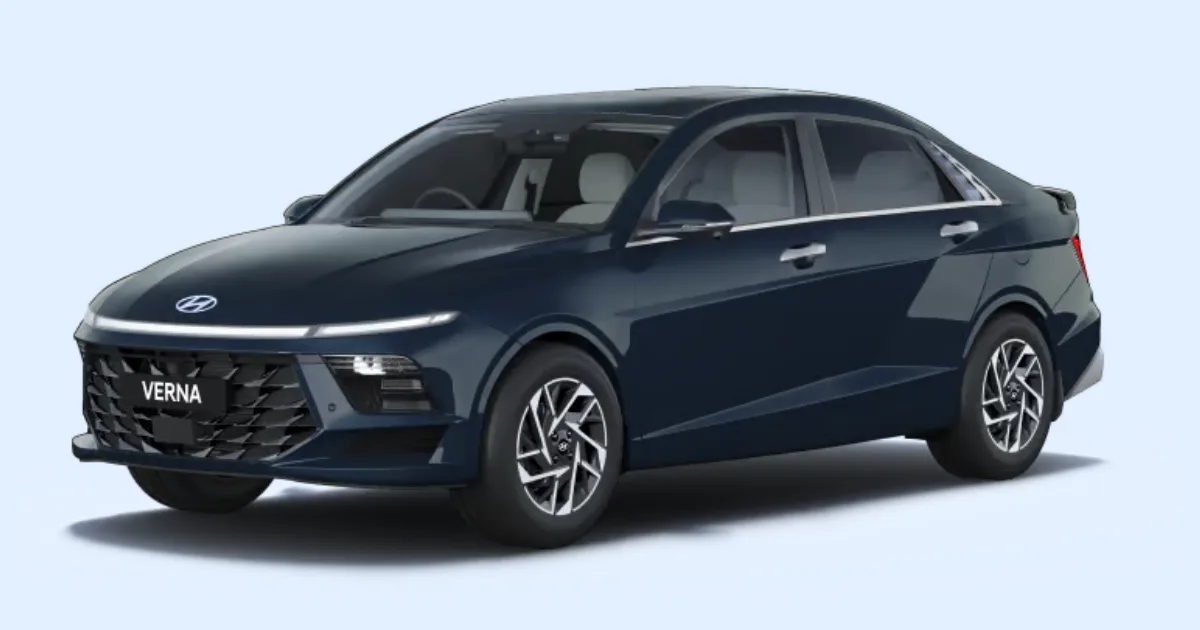
The 2026 Hyundai Verna is back, refreshed, feature loaded, and more confusing to buy than ever. With six variants on offer, many buyers searching Hyundai Verna HX6 vs HX8 vs HX10 comparisons find themselves stuck in the same dilemma. Should you pick the HX6, the HX8, or just go all in on the HX10?
That decision alone accounts for a difference of roughly Rs 4 lakh. Getting it wrong means either overpaying for features you may never use, or wishing later that your car had something important missing.
In this guide, we break down the real world differences between the variants so buyers comparing Hyundai Verna HX6 vs HX8 vs HX10 can clearly understand what you actually gain, what you give up, and which one makes the most practical sense.
Quick answer, for most buyers the HX8 Turbo DCT around Rs 16.20 lakh hits the sweet spot. You get ADAS, the turbo engine, ventilated seats and sunroof without paying the HX10 premium for marginal extras.
1. The Variant Lineup A Quick Overview
The 2026 Verna spans six variants – HX2, HX4, HX6, HX6+, HX8, and HX10. The first three (HX2, HX4, HX6) are paired with the 1.5L naturally aspirated (MPi) petrol engine, while the HX6+, HX8, and HX10 get the 1.5L Turbo GDi engine. This engine split is the single most important thing to understand because choosing between them is not just a matter of features, it is a matter of what kind of car you want to drive.
| Variant | Engine | Approx. Ex-Showroom |
| HX2 | 1.5L MPi MT | Rs 10.98 lakh |
| HX4 | 1.5L MPi MT / iVT | Rs 12.40 – 13.20 lakh |
| HX6 | 1.5L MPi MT / iVT | Rs 13.80 – 14.50 lakh |
| HX6+ | 1.5L Turbo MT | Rs 14.90 lakh |
| HX8 | 1.5L Turbo DCT | Rs 16.20 lakh |
| HX10 | 1.5L Turbo DCT | Rs 17.99 lakh |
For the purpose of this guide, we focus on the HX6 (MPi iVT), HX8 (Turbo DCT), and HX10 (Turbo DCT) the three variants that most buyers seriously consider once they’ve decided they want more than the basics.
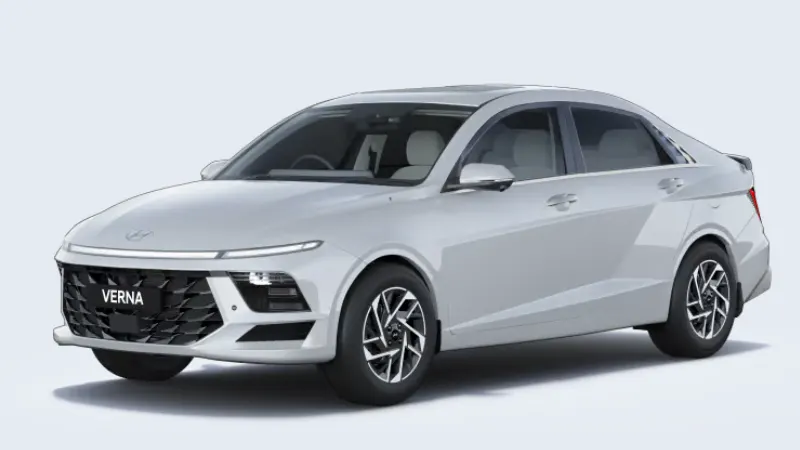
2. Price Difference What Does Each Extra Rupee Buy You?
Let’s start with the money, because that is what this decision often comes down to.
| Variant | Ex-Showroom | Est. On-Road (Delhi) |
| HX6 MPi iVT | Rs 14.50 lakh | Rs 17.00 lakh |
| HX8 Turbo DCT | Rs 16.20 lakh | Rs 19.00 lakh |
| HX10 Turbo DCT | Rs 17.99 lakh | Rs 21.00 lakh |
The gap between HX6 and HX8 is approximately Rs 1.70 lakh ex-showroom but on road, that gap widens to around Rs 2 lakh. Between HX8 and HX10, the difference is Rs 1.79 lakh ex-showroom, or roughly Rs 2.00 – 2.10 lakh on-road.
On-road prices include registration, insurance, and standard accessories. Actual figures may vary by city. Always compare on-road prices, not just ex-showroom.
ALSO READ: New Hyundai Venue HX5+ Variant Launched at ₹9.99 Lakh – Premium Features, Smart Choice!
3. Engine Difference MPi vs Turbo GDi
The HX6 comes with the naturally aspirated MPi engine, while the HX8 and HX10 get the turbocharged GDi unit. This is not a minor upgrade these are two fundamentally different driving experiences.
| Spec | HX6 – 1.5L MPi iVT | HX8 / HX10 – 1.5L Turbo DCT |
| Max Power | 115 PS @ 6,300 rpm | 160 PS @ 5,500 rpm |
| Max Torque | 143.8 Nm @ 4,500 rpm | 253 Nm @ 1,500–3,500 rpm |
| Gearbox | iVT (CVT) | 7-Speed DCT |
| 0–100 km/h | 12.5 seconds | 8.8 seconds |
| ARAI Mileage | 20.6 km/l | 17.4 km/l (DCT) |
| City Mileage | 13–14 km/l | 12–13 km/l |
The MPi engine is smooth, predictable, and easy to live with in city traffic. The iVT gearbox is calibrated for efficiency, and real-world mileage of 13–14 km/l in the city is genuinely achievable. It is the sensible, low-drama choice.
The Turbo GDi, on the other hand, is a genuinely exciting engine. 253 Nm from just 1,500 rpm means overtaking on highways is effortless just a dab of the throttle and the car surges forward. The 7-speed DCT is quick-shifting and engaging. The trade-off is slightly lower mileage and the long-term DCT reliability question mark that some owners have flagged though Hyundai’s track record on this front has improved significantly over the last two years.
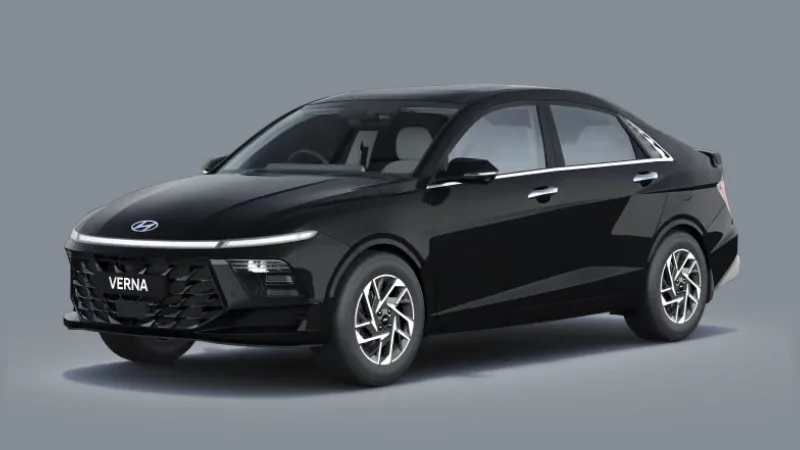
4. Features What Do You Gain Going From HX6 to HX8 to HX10?
This is where most buyers spend the most time and rightly so. Here is a precise breakdown of what you get extra at each step up.
HX6 (MPi iVT) What’s Included
- 10.25-inch touchscreen with Wireless Android Auto & Apple CarPlay
- Digital TFT instrument cluster
- 6-way manually adjustable driver seat
- Panoramic sunroof
- 6 airbags (standard)
- Automatic climate control
- Rear AC vents with USB Type-C
- Cruise control
- Hyundai Bluelink connected car tech
HX8 (Turbo DCT) What You Gain Over HX6
- 1.5L Turbo GDi engine + 7 Speed DCT (biggest upgrade)
- Ventilated AND heated front seats – a genuine comfort upgrade
- 8-way power-adjustable driver seat with memory function (segment-first)
- Passenger seat electric walk-in device (segment-first)
- ADAS Level 2 Forward Collision Warning, Lane Keep Assist, Blind Spot Warning, Adaptive Cruise Control
- 360-degree surround-view camera
- Bose 8-speaker premium audio system
- Dashcam built in (segment-first)
- Rear window sunshade
- Smart trunk hands-free boot opening
ALSO READ: Hyundai Ioniq 5 vs Nissan Ariya – Electric SUV Comparison, Strong Review
HX10 (Turbo DCT) What You Gain Over HX8
- Dual-tone Atlas White with Black Roof colour option (exclusive to HX10)
- Premium leatherette seat upholstery upgrade
- Additional ADAS features Rear Cross Traffic Alert, Driver Attention Warning
- Dark chrome exterior treatment
- Interior ambient lighting with additional door sill illumination
The honest truth about HX10? The gap over HX8 is smaller than you’d expect for Rs 1.79 lakh extra. The core ADAS, sunroof, turbo engine, ventilated seats, Bose audio, and 360 camera – all the features that matter most are already on the HX8. The HX10 is for buyers who want the absolute top-spec and are not price-sensitive.
5. Who Should Buy Which Variant?
Buy the HX6 MPi iVT if:
- You drive mostly within the city and your daily commute is under 40 km.
- Fuel efficiency is a top priority – 20.6 km/l ARAI is the best in the Verna range.
- You don’t need ADAS – you trust your own driving and the safety net of 6 airbags + ESC is enough.
- You want a smooth, relaxed daily driver not a performance car.
- Your budget ceiling is Rs 17 lakh on-road.
Buy the HX8 Turbo DCT if:
- You want the best value-for-money in the Verna range – this is the sweet spot.
- Highway driving is a regular part of your life – the turbo engine transforms long-distance trips.
- You want ADAS – and we genuinely think you should want ADAS in 2026.
- Ventilated seats, Bose audio, and the 360 camera are features you’ll actually use every day.
- Your budget is Rs 19–19.5 lakh on-road and you can stretch slightly for the right features.
Buy the HX10 Turbo DCT if:
- You want the absolute best Verna money can buy and the price difference doesn’t matter.
- The dual-tone black roof colour is something you specifically want it’s HX10-exclusive.
- You’re buying the car as a status statement and want to say you own the range-topper.
- The marginal extra ADAS features and interior upgrades are important to you.
6. How Does The HX8 Stack Up Against Rivals At The Same Price?
At Rs 16.20 lakh ex-showroom, the HX8 Turbo DCT competes directly with these alternatives:
| Car | Price (Ex-SW) | Key Advantage Over HX8 |
| Volkswagen Virtus 1.5 TSI AT Topline | Rs 16.30 lakh | Better driving dynamics, build quality |
| Honda City ZX CVT | Rs 16.07 lakh | Brand reliability, refined NA engine |
| Skoda Slavia 1.5 TSI DSG Sportline | Rs 16.19 lakh | Sportier to drive, MQB platform |
The Verna HX8 beats all three on feature count, boot space, and safety tech – especially ADAS, which none of its rivals offer in India at this price. The Virtus and Slavia are more engaging to drive, but they ask you to trade features for dynamics. The City is the refined, dependable choice but feels technologically outdated next to the Verna.
Our take: If raw driving pleasure is your priority, the Virtus 1.5 TSI is a better car. If you want the most complete everyday package at this price, the Verna HX8 wins comfortably.
7. Ownership Costs 5 Year Estimate
A car’s ex-showroom price is only half the story. Here’s what you can realistically expect to spend over five years, excluding fuel:
| Cost Head | HX6 MPi iVT | HX8 / HX10 Turbo DCT |
| Annual Service | Rs 8,000 | Rs 9,500 |
| Insurance (Year 1) | Rs 55,000 | Rs 65,000 |
| Insurance (Year 5) | Rs 18,000 | Rs 22,000 |
| Tyres (Set of 4) | Rs 18,000 | Rs 20,000 |
| 5-Year Fuel Cost* | Rs 2,80,000 | Rs 3,20,000 |
Fuel cost estimated at 15,000 km/year, petrol at Rs 100/litre, real-world mileage of 13 km/l (MPi) and 11.5 km/l (Turbo). The total 5-year ownership cost difference between HX6 and HX8 is approximately Rs 55,000–60,000 far less than the Rs 2 lakh price gap at purchase. This means the on-road price difference is the dominant factor, not running costs.
8. Final Verdict Our Pick For Each Type Of Buyer
After going through every angle price, engine, features, running costs, and competition here is our clear verdict:
City Commuter Pick HX6 MPi iVT
If your driving is 80% city and you prioritise mileage and a stress-free daily drive over performance, the HX6 MPi iVT at Rs 14.50 lakh is the smart, sensible buy. You won’t miss the turbo in stop-go traffic.
Best Overall Pick HX8 Turbo DCT
For most buyers, the HX8 is the answer. It has the turbo engine, ADAS, ventilated seats, Bose audio, 360-degree camera, and every feature you’ll actually use – all at Rs 16.20 lakh.
No-Compromise Pick HX10 Turbo DCT
If budget is not a concern and you want the absolute top-spec Verna with exclusive colour options and every last feature, the HX10 delivers. Just know that you’re paying Rs 1.79 lakh over HX8 for incremental upgrades.
Bottom Line: The Hyundai Verna HX8 Turbo DCT is the variant we’d pick and the one that most buyers will be happiest with 3 years down the line. It hits the perfect balance of performance, features, safety, and price in the 2026 sedan segment.