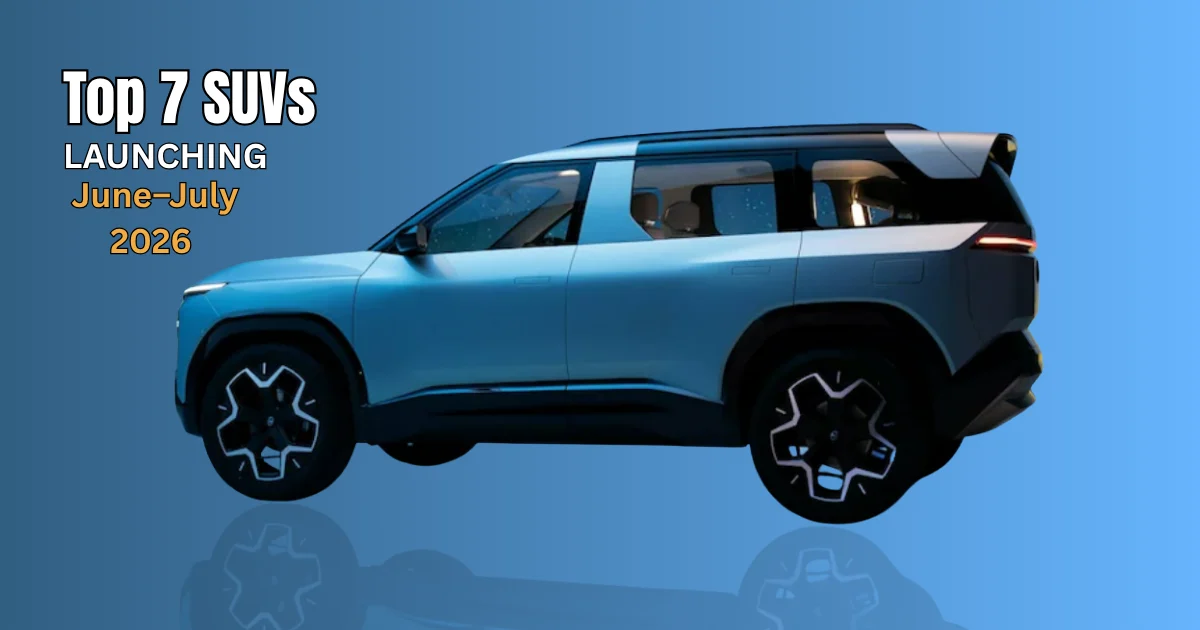
If you’ve been holding off on buying an SUV, your patience is about to pay off.
We’ve tracked down the top 7 SUVs launching in India in June-July 2026 and this two-month window is shaping up to be the most action-packed period Indian car buyers have seen in years. We’re talking 7 confirmed or near-confirmed launches everything from a ₹11 lakh first-time buyer’s car to a ₹75 lakh performance beast that’ll make your neighbours stare.
But here’s the thing: most articles out there just list these cars with a price range and call it a day. That’s not helpful when you’re trying to decide whether to book the Tata Sierra EV or wait for the MG Majestor, or figure out what your EMI would actually look like.
So this isn’t a list. It’s a guide. One that’ll help you actually make a decision.
Quick note on prices: all figures here are expected ex-showroom estimates. Confirm at your nearest dealership or on the official brand website at the time of launch.
Why June-July 2026 Is a Golden Window for SUV Buyers
Here’s something most buyers don’t know: car companies deliberately time their big launches for June and July. Why? Because they want the buzz to build through August and September, so that by the time the festive season hits Navratri, Dhanteras, Diwali their showrooms are packed with test-drive traffic and waiting lists are already forming.
What that means for you as a buyer is that June-July launches often come with the sharpest introductory pricing of the year. Brands want to generate momentum fast, so early buyers sometimes get introductory variants, low-cost AMC plans, or free accessories bundles that quietly disappear six months later.
Several of the cars on this list were originally supposed to arrive in January or March 2026. They got delayed. That’s actually good news the extra months meant more refinement, updated software, and in some cases, revised pricing.
India’s SUV segment now makes up over 50% of all passenger car sales. Manufacturers know this. Which is why the June–July 2026 calendar reads like a greatest hits of the auto world two electric SUVs, one plug-in hybrid option, one hardcore diesel off-roader, a sporty performance SUV, and two value-for-money family picks. Here’s the full picture before we dive in.
ALSO RAED: 2026 MG Majestor Diesel Review – Powerful Twin Turbo SUV vs Fortuner
All 7 SUVs in One Table
| # | SUV | Expected Price | Launch | Fuel | Seats | Best For |
| 1 | Tata Sierra EV | ₹20–24 lakh | June–July | Electric | 5 | EV enthusiasts |
| 2 | MG Majestor | ₹43–46 lakh | June | Diesel | 7 | Business buyers |
| 3 | Skoda Kodiaq RS | ₹70–75 lakh | June | Petrol Mild Hybrid | 5 | Performance lovers |
| 4 | Tata Safari EV | ₹30–35 lakh | June–July | Electric | 7 | Large families |
| 5 | Renault Bigster | ₹13–22 lakh | July | Petrol / Hybrid | 7 | Value family buyers |
| 6 | MG Starlight 560 | ₹20–25 lakh | July | EV / PHEV | 5 | Tech-forward buyers |
| 7 | Nissan Tekton | ₹11–18 lakh | June | Petrol | 5 | First-time buyers |
All prices are estimated ex-showroom. On-road price will be 10–15% higher depending on your state.
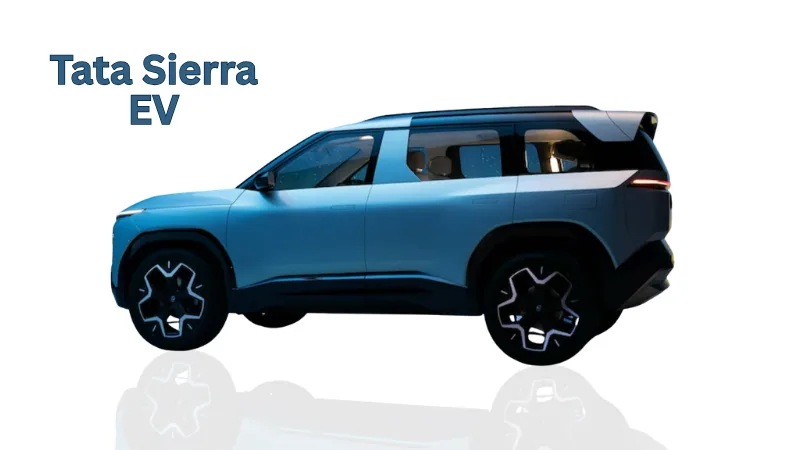
1. Tata Sierra EV:
Let’s start with the one that’s generating the most excitement and for good reason.
The Tata Sierra is not just a new car. It’s a resurrection. The original Sierra from the 1990s was India’s first homegrown SUV with a distinctive three-door “glasshouse” design tall, boxy, and instantly recognisable. Tata killed it in 2000. Twenty-six years later, it’s coming back, and this time it’s electric.
The Sierra EV was originally supposed to arrive in May 2026. It’s been pushed to June or July. Tata hasn’t officially said why, but if you look at how the Harrier EV launch went a few software calibration delays it’s likely the same story here. Not a red flag, just the reality of launching a complex EV.
What you’re getting: The Sierra EV sits on Tata’s acti.ev platform the same architecture under the Curvv EV and Punch EV, so it’s not an experiment. Two battery options are expected: a 55kWh and a 65kWh pack, with real-world ranges in the ballpark of 380 km and 470 km respectively (plan for about 80–85% of the claimed figure in mixed conditions).
What makes it genuinely exciting is the design. In a market full of similar-looking crossovers, the Sierra’s vertical glasshouse silhouette is a head-turner. A friend of mine who saw the concept at an auto show described it as “what happens if a Land Rover Defender went to college in India.” That’s probably accurate.
The honest downside: Tata’s fast-charging network, while growing, is still not as widespread as what Hyundai and MG have for their EVs. If you live in a Tier 2 city without home charging, factor that in.
Who should buy it: Someone who’s EV-ready you have a home charger or a society charging point and wants a car that doesn’t look like everything else on the road. If you’re upgrading from a Nexon EV or Punch EV, this is a very natural step up.
Wait or Buy? Strong buy. The Sierra EV fills a genuine gap in Tata’s lineup and nothing else at this price point offers this combination of range, design, and brand trust in the EV space.
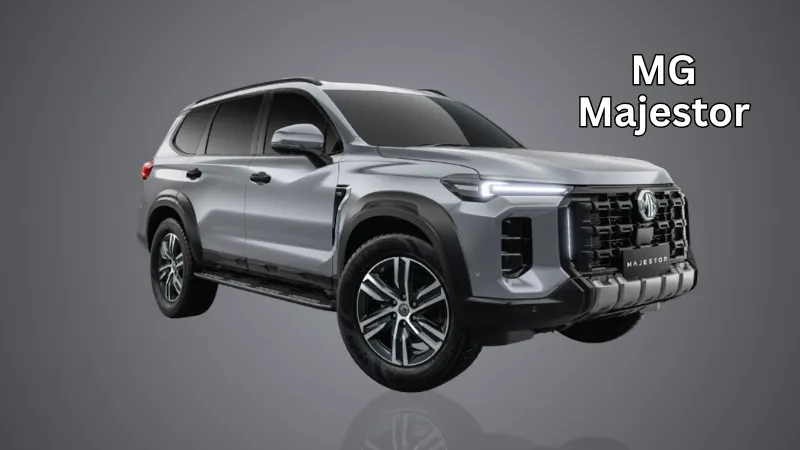
2. MG Majestor:
Picture this: you’re a business owner in Surat. You run a mid-sized textile trading firm. You want a car that commands respect when you pull into a client’s factory something with a strong road presence, real off-road credentials for the occasional highway trip to Rajasthan, and a cabin that doesn’t feel like an afterthought. Until now, that car was the Toyota Fortuner. Full stop.
The MG Majestor is trying to change that conversation.
And it’s not being subtle about it. The Majestor is a full-sized, body-on-frame SUV the same construction as the Fortuner with a 2.0-litre twin-turbo diesel engine producing 213bhp and 478Nm of torque, paired with an 8-speed automatic. For context, the Fortuner Legender makes 204bhp. The Majestor edges it on paper.
More importantly, MG has stacked the features list. Three differential locks. Multiple terrain modes. A panoramic sunroof. Level 2 ADAS. Twin wireless chargers. And this is the bit that’ll genuinely impress passengers powered front seats with heating, ventilation, and massage. In a ₹45 lakh car, that’s remarkable.
The expected price is ₹43–46 lakh ex-showroom, which would undercut the equivalent Fortuner Legender by ₹4–7 lakh. Same or better spec, lower price.
The honest downside: MG’s after-sales service network is not Toyota’s. If you’re travelling frequently to smaller cities or remote areas, the Fortuner’s pan-India service presence is a genuine practical advantage. MG has been expanding rapidly, but Toyota has 350+ touch points across India versus MG’s roughly 230. That gap matters on a long road trip when something goes wrong.
Who should buy it: Business executives, fleet buyers, and anyone who’s been eyeing the Fortuner but always felt they were paying a premium for the badge rather than the product. The Majestor makes that trade-off a lot easier. Wait or Buy? If after-sales isn’t a concern for your usage pattern, this is the best-value premium diesel SUV launching this season. Strong buy.
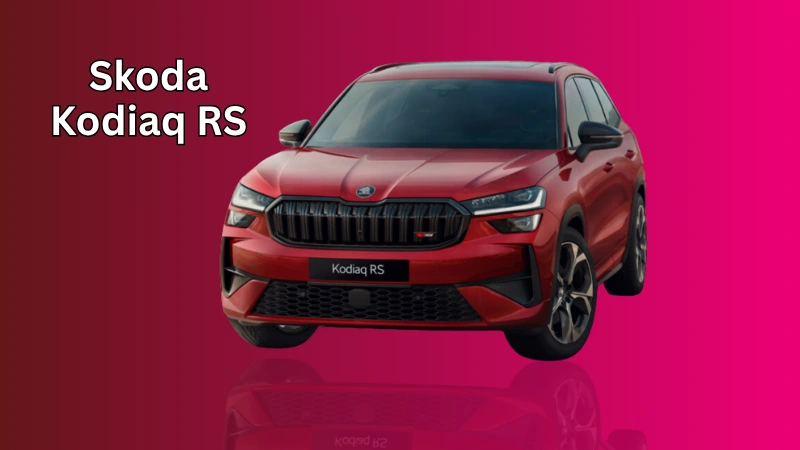
3. Skoda Kodiaq RS:
Most people buy SUVs for practicality. The Skoda Kodiaq RS is for people who refuse to completely give up on driving joy in the process.
The RS badge in Skoda’s lineup means sportier stiffer suspension tuning, a more powerful engine variant, distinct exterior touches (black accents, RS-specific alloys, sportier bumpers), and a driving character that separates it from the standard Kodiaq, which is already a very good car.
The Kodiaq RS is expected to arrive at around ₹70–75 lakh which puts it firmly in luxury territory. At this price, you’re also looking at BMW X1, the Volvo XC60, and the Volkswagen Tayron R-Line (which launched earlier this year at ₹46.99 lakh, so the Kodiaq RS is positioning above it).
The mild-hybrid petrol powertrain should improve real-world fuel efficiency meaningfully over pure petrol expect 12–14 kmpl in mixed conditions, which is reasonable for this class.
Who should buy it: If you have ₹75 lakh to spend on a car and you value the experience of driving it not just being ferried in it the Kodiaq RS is probably the most interesting option launching this season. It’s a driver’s car in an SUV body. That’s genuinely rare.
Who should not buy it: If status and road presence are more important than driving dynamics, the Fortuner or the Majestor will turn more heads on Indian roads. The Kodiaq is respected by people who know cars; it’s not a “look at me” car in the Indian market sense.
Wait or Buy? Niche pick but exactly right for the right person. If you test drive it and it clicks, you’ll know immediately.
ALSO READ: Mahindra XUV 3XO Review: Compact No Longer Means Compromised
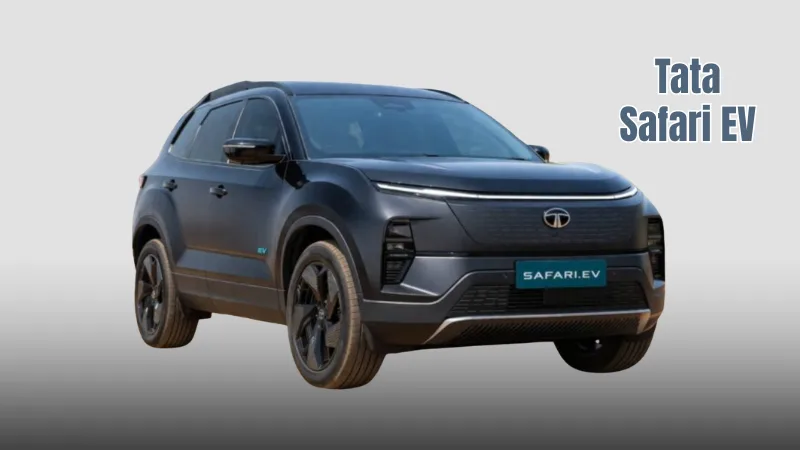
4. Tata Safari EV:
Here’s a number that will get your attention: India currently has zero mass-market 7-seater electric SUVs available at an accessible price point. The Safari EV, expected at ₹30–35 lakh, could change that.
This car is built on the same acti.ev platform as the Harrier EV which has already proven itself in the market with solid real-world range and a feature-rich cabin. The Safari EV extends that to three rows.
The headline spec that nobody is talking about enough: AWD is expected as an option. That means you get an electric 7-seater with all-wheel drive for around ₹33–35 lakh. That combination doesn’t exist in India today. For families that take mountain trips Shimla, Manali, Ooty AWD in an electric car at this price is a serious proposition.
Expected range with the larger battery pack is being quoted around 550–600 km claimed, which translates to roughly 450–480 km in real-world mixed conditions. Enough for a Delhi–Jaipur–Delhi road trip on a single charge.
The honest concern: Boot space. The Harrier EV already has a compromised boot when you fold down the third row. The Safari EV, being a stretched version, should handle this better but if you’re planning to load up for a family trip with luggage AND have three rows up, you’ll want to see the actual boot dimensions before you book.
Who should buy it: Families of 6–7 who’ve been reluctant to go electric because they need the space and range. This car closes both gaps simultaneously.Wait or Buy? Best family EV launching this season. If you need 7 seats, this is your car.
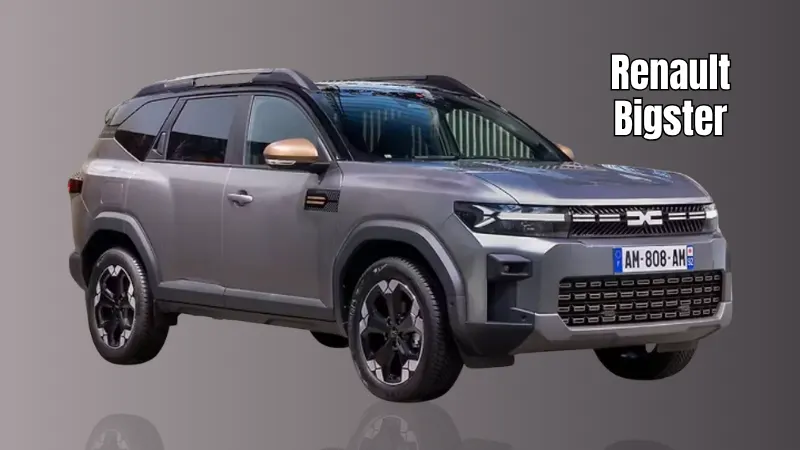
5. Renault Bigster:
The Bigster doesn’t have the brand hype of Tata or the premium cachet of Skoda. That’s exactly why it might be the smartest buy of the season.
Renault’s comeback in India started with the relaunched Duster a compact 5-seater that came back stronger than expected. The Bigster is the 7-seater sibling, built on an extended version of the same platform, adding a third row and roughly 200mm more wheelbase.
What makes it interesting is the powertrain options. The standard Bigster will come with petrol, but Renault is also expected to offer a strong hybrid version and if that hybrid is priced below ₹20 lakh, it becomes the most affordable hybrid 7-seater in India. Full hybrid SUVs at this price range are genuinely rare.
AWD is also expected on higher variants another feature that’s uncommon at this price point.
At ₹13–22 lakh across variants, the Bigster has a very wide net. The base variant will pull in first-time 7-seater buyers, and the top hybrid AWD will compete with the Hyryder and Carens Clavis in the hybrid space.
Real example: A friend recently bought the new Duster base variant over the Creta simply because it offered more boot space and AWD capability for roughly the same price. His one complaint? “I wish it had a third row for when my in-laws visit.” The Bigster solves exactly that.
Wait or Buy? Best value 7-seater launching this season. Especially if the hybrid variant is priced well. Worth a test drive before you finalise anything else in this budget.
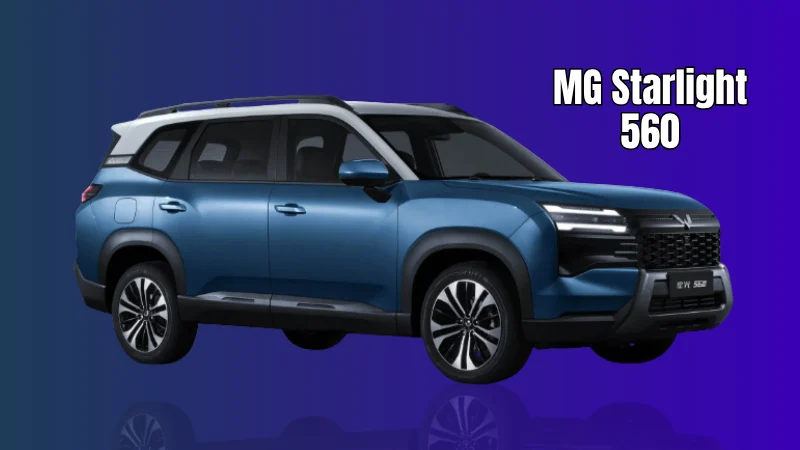
6. MG Starlight 560:
The MG Starlight 560 is the wildcard on this list less confirmed than the others, but potentially the most interesting from a technology standpoint.
MG is expected to offer the Starlight 560 with both a pure electric powertrain and a plug-in hybrid option. The PHEV angle is the key thing here: you get electric efficiency for daily commutes, and a petrol engine as backup for long trips. Range anxiety? Gone. Most PHEV buyers in India who’ve driven models like the older Volvo hybrid plug-ins say they rarely use petrol in city driving.
At an expected price of ₹20–25 lakh, a PHEV option would be the most affordable plug-in hybrid in India by a considerable margin. The next closest thing today costs ₹60 lakh+.
The honest concern that buyers should know: MG’s parent company SAIC is Chinese-owned, and India’s FDI rules with respect to Chinese investment have created some regulatory uncertainty for MG in recent years. This hasn’t stopped sales, but if you’re buying with a 5–7 year ownership horizon, it’s worth being aware of.
Who should buy it: Tech-forward buyers who want EV efficiency without range anxiety and can’t stretch to ₹30+ lakh. The PHEV option is genuinely compelling if confirmed.
Wait or Buy? Conditional buy. Wait for confirmed specs and PHEV pricing before booking. Don’t put down a booking amount based on expected specs alone.
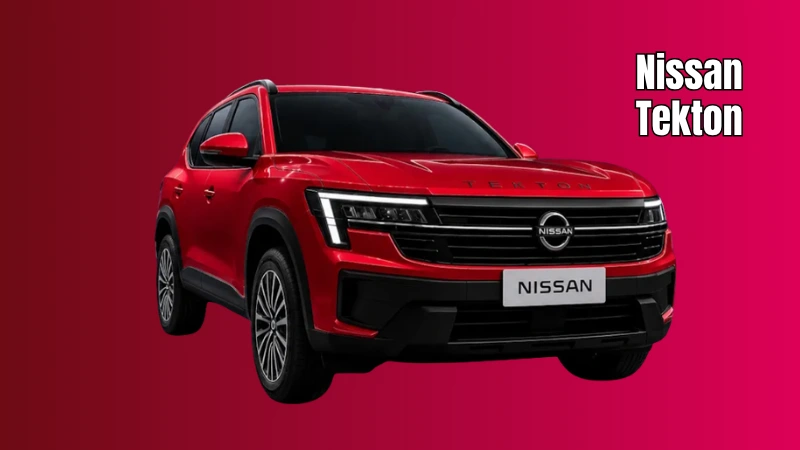
7. Nissan Tekton:
Nissan hasn’t had a great decade in India. The Kicks underperformed. The Terrano faded. But the Tekton their upcoming compact C-SUV looks like a genuine course correction.
This is a 5-seater compact SUV targeting the Creta, Seltos, and Grand Vitara space the most hotly contested segment in Indian automotive. Expected price of ₹11–18 lakh across variants puts it right in the volume sweet spot.
Nissan’s global design language has improved dramatically with their recent international launches, and if the Tekton carries that forward to India, it could be a genuinely attractive option. Expected features include a connected infotainment system, ADAS safety package, and automatic transmission options from mid-spec upwards.
What Nissan needs to get right: Localisation and after-sales. The Creta and Seltos dominate this segment partly because Hyundai and Kia have an excellent service network. Nissan needs to show up with competitive pricing, a reliable service network, and at least 5 years of warranty to win serious consideration.
The EMI reality: At ₹13 lakh on-road (estimated mid-spec), with ₹2.6 lakh down payment (20%) and a 7-year loan at 8.75% interest, your EMI would be approximately ₹13,500–₹14,500/month. For a young professional in their late twenties, that’s a realistic number for an SUV with this spec level.
Who should buy it: Young professionals, first-time SUV buyers stepping up from hatchbacks, and anyone in the ₹12–16 lakh budget who wants a fresh alternative to the Creta.
Wait or Buy? Watch this space carefully. If Nissan prices it aggressively and delivers on after-sales promises, this could be the surprise hit of the season.
Which SUV Should You Buy? Your Quick Decision Guide
Stop overthinking it. Here’s the shortcut:
| You are… | Your car is… | Why |
| A first-time buyer with ₹12–16 lakh | Nissan Tekton | Fresh alternative, right price |
| A family needing 7 seats, budget ₹15–20 lakh | Renault Bigster | Best value 7-seater |
| A family needing 7 seats, open to EV | Tata Safari EV | Only 7-seat EV in this range |
| A solo buyer / couple who wants EV | Tata Sierra EV | Design + range + trust |
| A business executive with ₹45 lakh | MG Majestor | Premium presence, Fortuner spec |
| A driving enthusiast with ₹70+ lakh | Skoda Kodiaq RS | SUV that drives like a sport car |
| A tech buyer who hates range anxiety | MG Starlight 560 | PHEV petrol + EV in one |
One piece of practical advice: If you’re seriously considering any of these cars, go to the dealership before the launch and register your interest. Dealerships often give early visitors priority in the test drive queue and sometimes offer launch-edition pricing to buyers who’ve already been in conversation. It takes 10 minutes and costs nothing.
What Your EMI Will Actually Look Like
No one talks about this clearly, so here it is. Assumptions: 80% loan, 8.75% interest rate (standard car loan rate at major banks as of mid-2026), 7-year tenure.
| SUV | Est. On-Road (₹) | Down Payment (20%) | Monthly EMI |
| Nissan Tekton (mid) | ~13 lakh | ~2.6 lakh | ~₹13,500 |
| Renault Bigster (mid) | ~17 lakh | ~3.4 lakh | ~₹17,700 |
| Tata Sierra EV | ~25 lakh | ~5 lakh | ~₹26,000 |
| Tata Safari EV | ~37 lakh | ~7.4 lakh | ~₹38,500 |
| MG Majestor | ~51 lakh | ~10.2 lakh | ~₹53,000 |
| Skoda Kodiaq RS | ~84 lakh | ~16.8 lakh | ~₹87,500 |
Pro tip: Electric vehicles often qualify for 0.25–0.5% lower interest rates at banks like SBI and Bank of Baroda under green vehicle financing schemes. On a ₹25 lakh loan, that saves you roughly ₹15,000–20,000 over 7 years. Ask your bank specifically for “green auto loan” rates before signing. Also worth noting: if you’re self-employed or a business owner, an SUV used for business purposes can often be depreciated under Section 32 of the Income Tax Act. Have your CA look at this the saving can be meaningful on a ₹45 lakh+ purchase.
Top 7 SUVs Launching in India in June–July 2026 FAQs
Which is the best SUV launching in India in June–July 2026?
There’s no single answer it depends entirely on your budget and use case. For pure value, the Renault Bigster. For EV buyers, the Tata Sierra EV. For business buyers, the MG Majestor. Scroll up to the decision table for a quick answer based on your profile.
Is the Tata Sierra EV worth waiting for?
Yes, if you have home charging infrastructure and can stretch to ₹22–24 lakh. The design is genuinely unique, the platform is proven, and Tata’s EV after-sales has improved significantly in 2025–26. If you don’t have home charging, be realistic about whether an EV suits your lifestyle first.
What is the most affordable SUV launching in June–July 2026?
The Nissan Tekton at an expected starting price of ₹11 lakh. Second most affordable is the Renault Bigster at ₹13 lakh for the base variant.
Will the MG Majestor actually beat the Toyota Fortuner?
On paper specs and feature-for-rupee value, yes. On after-sales trust and resale value, the Fortuner still holds an edge. If you keep cars for 3–4 years, the Majestor makes sense. If you’re a 6–8 year ownership type who worries about service in smaller cities, the Fortuner’s network advantage matters more.
Which 2026 launches qualify for EV subsidies?
The Tata Sierra EV and Tata Safari EV should both qualify under state-level EV subsidies, which vary by state. Maharashtra, Delhi, Gujarat, and Karnataka all offer meaningful EV incentives. Check your state’s EV policy some offer direct purchase subsidy, others offer road tax exemption. The savings can be ₹1–2.5 lakh depending on your state.
Should I buy a car now or wait for these June–July launches?
If you genuinely need a car today, buy. Don’t delay life for an “upcoming launch.” But if your current car is running fine and you have 6–8 weeks of flexibility, waiting makes sense especially if the Sierra EV or Safari EV is on your radar. These are significant new products, not incremental updates.
The Bottom Line
June–July 2026 is a rare window where the Indian SUV market is actually offering genuine choice across every budget. You don’t have to buy what everyone else is buying.
The Tata Sierra EV is the most emotionally compelling launch. The MG Majestor is the most value-disrupting one. The Renault Bigster is the most underrated. The Skoda Kodiaq RS is the most driver-focused. And the Tata Safari EV may quietly be the most practically significant because a 7-seat EV at ₹32 lakh is genuinely new territory for Indian families.
Whichever car is calling your name, do this: get the test drive before you book. Every single one of these cars will have something on paper that looks great and something in the real world that surprises you positively or negatively. The drive is what will make the decision clear.