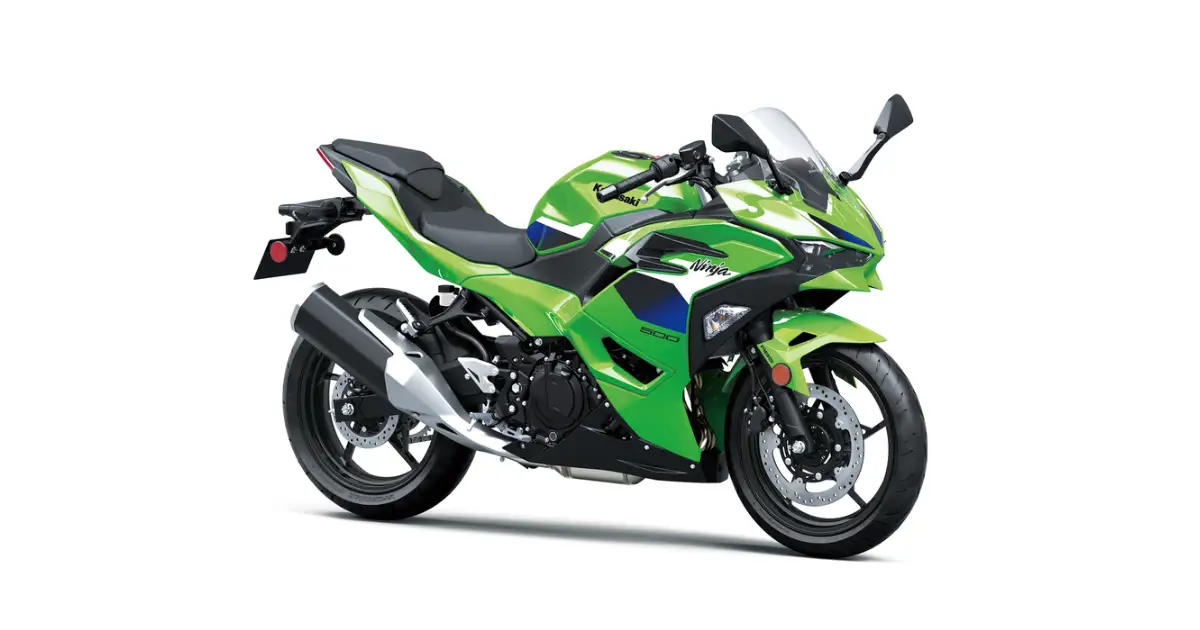
The premium entry-level sportbike segment in India has never been more competitive. Buyers today expect strong performance, modern technology, premium hardware, and aggressive pricing. Amid this fierce competition, India Kawasaki Motors has launched the 2026 Kawasaki Ninja 500 at Rs. 5.76 lakh (ex-showroom), making it Rs. 10,000 more expensive than before.
At first glance, many enthusiasts are asking the same question: Why Kawasaki Ninja 500 Is So Expensive In India?
After all, rivals like the Aprilia RS 457 offer more features and a lower price tag. The answer lies in a combination of import duties, taxation, and Kawasaki’s unique positioning strategy.
For 2026, the Ninja 500 receives two notable updates: a new signature Lime Green paint scheme and E20 fuel compatibility. Apart from these changes, the motorcycle remains mechanically identical to the outgoing model. While some buyers may see this as disappointing, others will appreciate Kawasaki’s proven formula of simplicity, reliability, and everyday usability.
Some Reasons Why Kawasaki Ninja 500 Is So Expensive In India?
The biggest reason behind the motorcycle’s high price is its import route.
Unlike many motorcycles in this segment that are assembled locally, the Ninja 500 comes to India as a CBU (Completely Built Unit). This means the motorcycle is imported fully assembled rather than being built in India from CKD kits.
As a result, Kawasaki has to deal with:
- High import duties
- Additional customs charges
- Logistics expenses
- Higher taxation
Adding to the challenge is India’s GST structure. Motorcycles above 350cc attract a higher tax slab, which further increases the final cost.
This is the primary reason why the Kawasaki Ninja 500 is so expensive in India, despite having an engine size similar to several more affordable rivals.
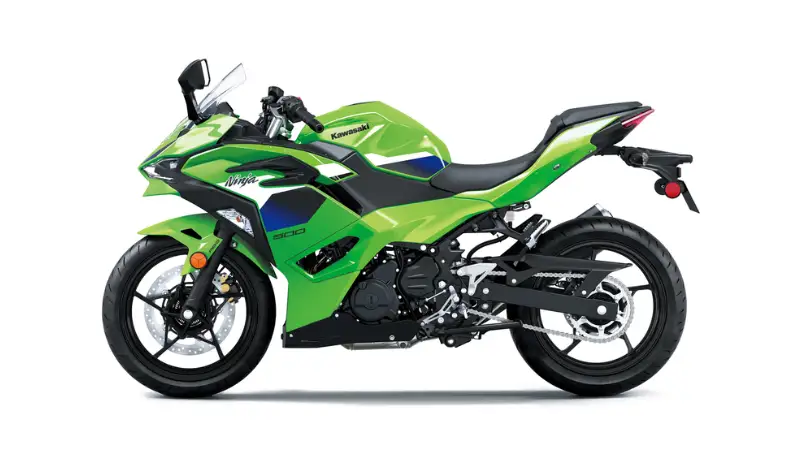
2026 Kawasaki Ninja 500: What’s New?
The 2026 update focuses on compliance and visual appeal rather than performance upgrades.
Key Updates
- New Lime Green colour option
- E20 fuel compatibility
- Rs. 10,000 price increase
- Mechanical package remains unchanged
The iconic Lime Green shade strengthens the motorcycle’s connection with Kawasaki’s global racing heritage and gives it a more authentic Ninja identity.
The second update is E20 compliance, allowing the bike to run on petrol blended with up to 20 percent ethanol, helping it meet future fuel regulations in India.
ALSO READ: Ducati Diavel V4 Black Roadster India Launch Soon: Darker Style Meets V4 Superbike Performance
Engine and Performance
Powering the motorcycle is the same tried-and-tested 451cc liquid-cooled parallel-twin engine.
Engine Specifications
| Technical Specification | Details |
|---|---|
| Engine Configuration | 451cc Liquid-Cooled Parallel-Twin |
| Maximum Output | 45 hp @ 10,000 rpm |
| Peak Pulling Power | 42.6 Nm @ 7,500 rpm |
| Transmission System | 6-Speed Manual Gearbox |
| Clutch Technology | Assist & Slipper Clutch |
The engine produces 45 hp at 10,000 rpm and 42.6 Nm at 7,500 rpm.
What makes the Ninja special isn’t outright performance but the way it delivers power. The engine feels smooth, refined, and predictable throughout the rev range. It is equally comfortable in city traffic and on long highway rides.
For riders upgrading from a 150cc or 250cc motorcycle, the Ninja 500 offers an approachable yet exciting riding experience.
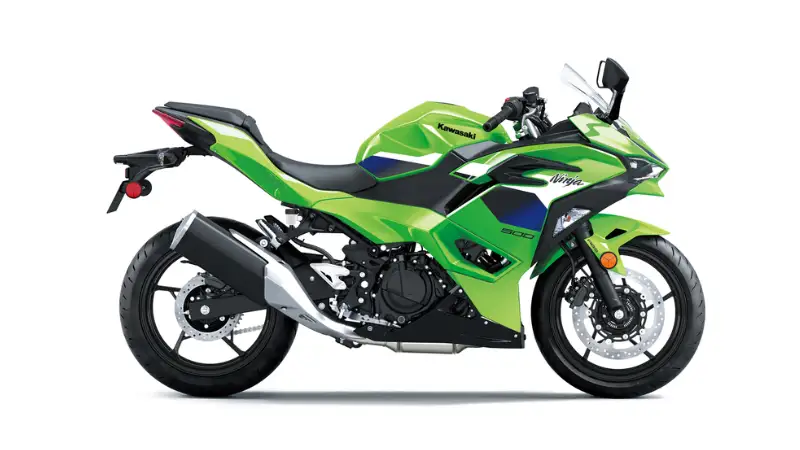
Lightweight Chassis and Comfortable Ergonomics
Another reason enthusiasts continue to appreciate the Ninja lineup is its rider-friendly nature.
The motorcycle is built around a lightweight steel trellis frame and weighs just 171 kg kerb, making it lighter than many competitors.
Suspension Setup
- Telescopic front forks
- Rear monoshock suspension
While rivals offer premium USD forks, Kawasaki has chosen a simpler setup focused on reliability and comfort.
The riding position is also one of the Ninja 500’s strongest points.
Ergonomic Highlights
- Upright riding posture
- Comfortable handlebar position
- 785 mm seat height
- Easy accessibility for shorter riders
Unlike aggressive supersport motorcycles that become tiring during daily use, the Ninja 500 remains practical for commuting and touring alike.
ALSO READ: Mini Countryman C India Launched: Made-in-India Luxury SUV Challenges BMW X1
Features and Technology
The Ninja 500 follows a minimalist approach.
Features Available
- Full LED lighting
- Bluetooth-enabled LCD instrument cluster
- Smartphone connectivity
- Assist and slipper clutch
- Dual-channel ABS
Features Missing
- Traction control
- Riding modes
- Quickshifter
- TFT display
- Cornering ABS
This simple equipment list is one reason some buyers question why the Kawasaki Ninja 500 is so expensive in India, especially when competitors offer significantly more technology.
Ninja 500 and RS 457 Face Off: Specs, Value & Performance Compared
The Aprilia RS 457 is currently the biggest challenge to Kawasaki’s offering.
| Feature | Ninja 500 | Aprilia RS 457 |
| Engine | 451cc Twin | 457cc Twin |
| Power | 45 hp | 47.6 hp |
| Torque | 42.6 Nm | 43.5 Nm |
| Weight | 171 kg | 175 kg |
| Suspension | Telescopic Forks | USD Forks |
| Electronics | Basic | Advanced |
| Price | Rs. 5.76 Lakh | Rs. 4.22-4.37 Lakh |
On paper, the Aprilia clearly offers more value.
However, Kawasaki counters with:
Trusted global Ninja brand image
Proven reliability
Strong resale value
Smooth engine refinement
Comfortable ergonomics
Pros and Cons
Pros
Smooth and refined twin-cylinder engine
Comfortable riding position
Lightweight handling
Excellent build quality
Iconic Ninja styling
Cons
Significantly more expensive than rivals
Basic electronics package
No traction control
Conventional front forks
Limited value-for-money appeal
Who Should Buy the Ninja 500?
The Ninja 500 makes sense for riders who:
Prefer a long-term ownership experience backed by Kawasaki’s proven reliability
Prioritize reliability over gadgets
Want a comfortable sportbike for daily use
Prefer smooth power delivery
Appreciate Kawasaki’s engineering reputation
Who Should Avoid It?
You may want to consider alternatives if:
Track-focused performance is your priority
You want maximum features per rupee
Advanced electronics are important
Need a motorcycle that offers stronger value without demanding a premium investment
Final Verdict
The answer to Why Kawasaki Ninja 500 Is So Expensive In India ultimately comes down to its CBU import status and taxation structure rather than its mechanical package.
From a pure value perspective, motorcycles like the Aprilia RS 457 offer more features and performance for less money. However, the Ninja 500 has never been about winning the specification sheet battle.
Instead, it appeals to riders who value refinement, reliability, lightweight handling, and the legendary Ninja badge. The 2026 update may be small, but the motorcycle continues to deliver a riding experience that many enthusiasts will happily pay a premium for.
For buyers seeking a dependable, easy-to-live-with twin-cylinder sportbike, the Ninja 500 remains one of the most polished options in the segment—even if its price continues to spark debate.
Frequently Asked Questions
Q1. Why Kawasaki Ninja 500 Is So Expensive In India?
A: The motorcycle is imported as a CBU, which attracts high import duties and taxes, significantly increasing its price.
Q2. What is the price of the 2026 Kawasaki Ninja 500 in India?
A: The 2026 Ninja 500 has been launched in India with a starting ex-showroom price of Rs. 5.76 lakh.
Q3. Does the updated Ninja 500 support E20 petrol?
A: Yes, Kawasaki has updated the motorcycle to support E20 fuel.
Q4. What is the closest competitor to the Kawasaki Ninja 500 in the Indian market?
A: The Aprilia RS 457 is currently the closest rival in terms of performance and positioning.
Q5. Has Kawasaki made any mechanical changes to the Ninja 500 for 2026?
A: No, the motorcycle continues with the same 451cc parallel-twin engine producing 45 hp and 42.6 Nm.