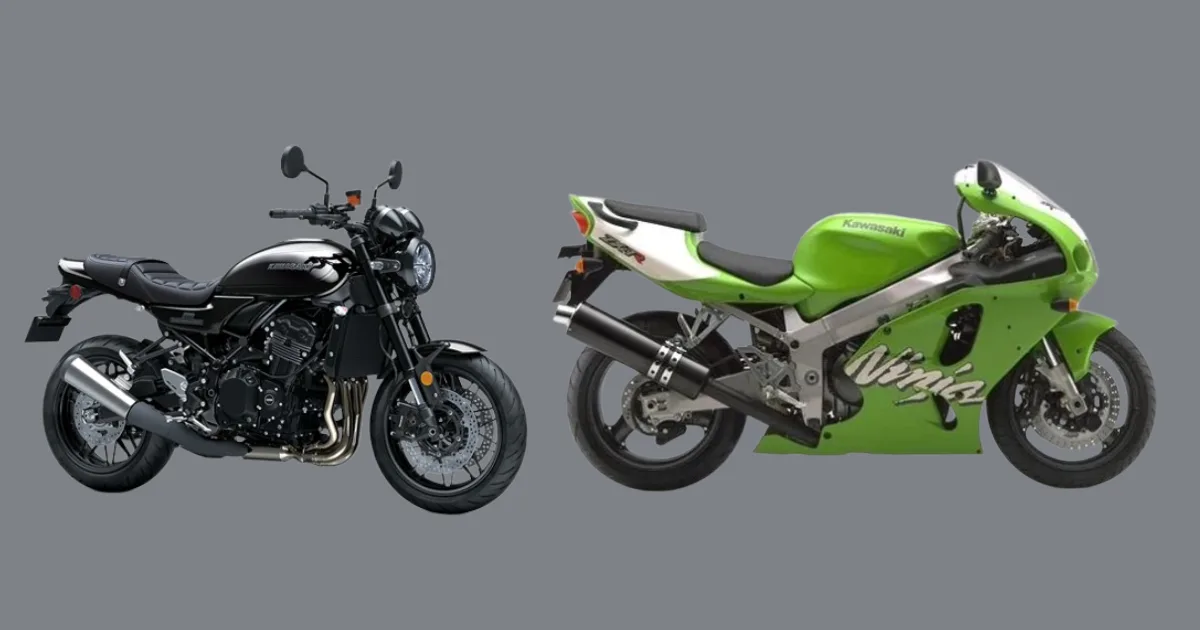
When it comes to motorcycles, performance isn’t measured only by horsepower, acceleration or top speed. For many enthusiasts, the sound of an engine is just as important as the numbers on a specification sheet. A motorcycle’s exhaust note can create an emotional connection that makes every ride more memorable.
Over the decades, Kawasaki has produced some truly iconic machines, ranging from wild two-stroke triples to high-revving inline-four superbikes and supercharged performance motorcycles. Each generation has brought its own personality, and some models have become particularly famous for the way they sound.
This article looks at five Best-Sounding Kawasaki Motorcycles that have earned a special place among petrolheads. The selection isn’t based purely on volume. Instead, it considers the uniqueness of the engine note, exhaust character, high-RPM sound, stock exhaust quality and the emotional response these motorcycles create for enthusiasts.
Whether you prefer the raw rasp of a two-stroke, the addictive scream of an inline-four or the futuristic whine of a supercharger, Kawasaki’s history has something special to offer.
What Makes a Motorcycle Sound Great?
Before looking at the individual motorcycles, it is worth understanding why some engines sound more exciting than others.
Engine configuration plays a major role. A parallel-twin, V-twin, inline-three and inline-four can each produce completely different sound characteristics. Two-stroke engines also have a distinctive exhaust note that is difficult to replicate with modern four-stroke technology.
The exhaust system is equally important. Header design, collector arrangement, muffler construction and exhaust volume all influence the final sound. Intake noise and mechanical sounds can also contribute to the overall experience.
For this reason, the Best-Sounding Kawasaki Motorcycles aren’t necessarily the loudest ones. A great motorcycle sound is about character, clarity and how the engine’s note changes as the throttle opens and the revs rise.
1. Kawasaki H2 Mach IV 750 (1972)
The Kawasaki H2 Mach IV 750 is one of the most legendary motorcycles in Kawasaki’s history. Introduced in 1972, this performance machine quickly gained a reputation for being extremely fast and intimidating for its era.
The H2 was powered by a 748cc air-cooled two-stroke inline-three-cylinder engine that produced around 74 horsepower. At a time when motorcycle technology was rapidly developing, that combination of power and relatively low weight made the H2 a serious performance machine.
Its engine configuration is also the main reason for its unforgettable sound.
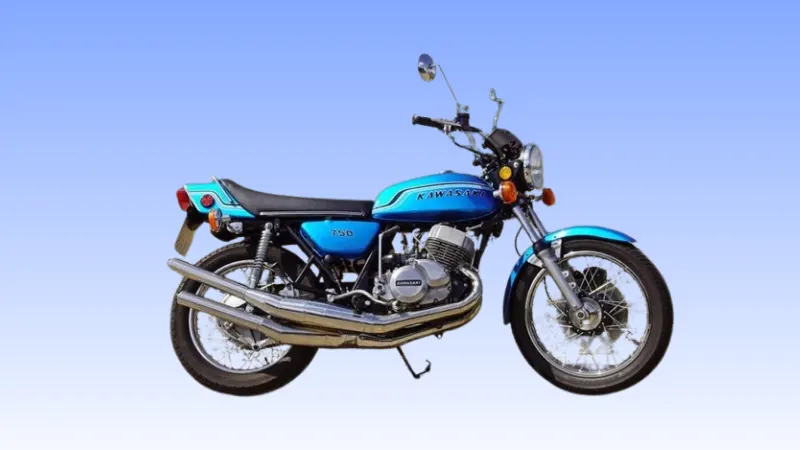
Instead of the smooth and refined howl of a modern inline-four, the H2 produces a raw, raspy and mechanical two-stroke soundtrack. As the engine climbs through the rev range, the exhaust note becomes sharper and more aggressive.
The motorcycle earned the nickname “Widowmaker”, largely because its power delivery and chassis characteristics could be challenging for inexperienced riders. Its reputation only added to its legendary status.
For collectors and enthusiasts, the H2 remains one of the Best-Sounding Kawasaki Motorcycles because its two-stroke triple delivers a sound that modern motorcycles simply cannot reproduce in the same way.
Key Sound Character
- Two-stroke inline-three soundtrack
- Sharp and raspy exhaust note
- Distinctive high-RPM character
- Raw and mechanical personality
2. Kawasaki ZX-7R (1996–2003)
The Kawasaki ZX-7R belongs to a completely different era, but it has become equally respected for its distinctive sound.
Produced between 1996 and 2003, the ZX-7R was heavily influenced by Kawasaki’s World Superbike racing technology. It used a 749cc liquid-cooled inline-four engine connected to a six-speed transmission.
The engine produced around 122 horsepower and 58 lb-ft of torque, while the motorcycle could reach a top speed of approximately 166 mph.
But for enthusiasts, the numbers are only part of the story.
ALSO READ: Aprilia Storm 125 vs VIDA VX2: Which Scooter Is Better?
The ZX-7R’s inline-four engine has a distinctive mechanical character, particularly when it is pushed toward the upper end of its rev range. The engine’s high-RPM howl is one of the major reasons this motorcycle continues to attract collectors and fans of classic Japanese superbikes.
The sound becomes even more aggressive with certain aftermarket exhaust systems. However, its original engine character is already enough to make the ZX-7R memorable.
For fans of 1990s superbikes, the ZX-7R represents an era when racing technology and street motorcycles were closely connected.
It deserves its place among the Best-Sounding Kawasaki Motorcycles because of its classic high-revving inline-four soundtrack and unmistakable 1990s superbike personality.
Key Sound Character
- 749cc inline-four
- High-RPM mechanical howl
- Classic Japanese superbike soundtrack
- Aggressive character under hard acceleration
3. Kawasaki Ninja ZX-10R (2011–2020)
The Kawasaki Ninja ZX-10R represents the evolution of the high-performance inline-four formula.
Although the ZX-10R was originally introduced in 2004 as the successor to the ZX-9R, the 2011–2020 generation brought major changes to its engine, chassis and electronic systems.
The motorcycle was equipped with a 998cc inline-four engine, producing close to 200 horsepower depending on the specific model and measurement conditions. Ram-air intake technology helped enhance performance at speed, while advanced electronics made it more capable on both road and track.
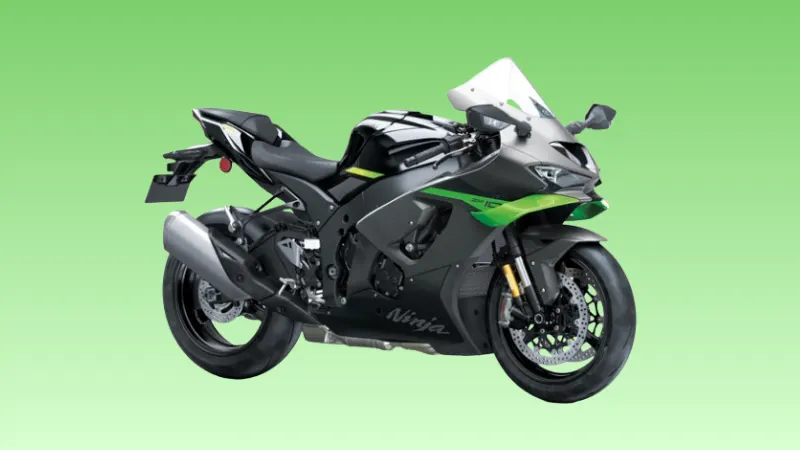
And then there is the sound.
The ZX-10R delivers a classic high-revving inline-four scream, but with a modern superbike edge. As the tachometer climbs toward the upper end of its range, the engine note becomes increasingly sharp and intense.
A quickshifter further adds to the experience by allowing rapid gear changes without manually operating the clutch during upshifts.
The combination of high RPM, aggressive engine tuning and performance-focused intake and exhaust design gives the ZX-10R a soundtrack that perfectly matches its WorldSBK-inspired character.
Among the Best-Sounding Kawasaki Motorcycles, the ZX-10R stands out for riders who prefer an aggressive and technologically advanced superbike soundtrack.
Key Sound Character
- 998cc inline-four
- High-revving engine note
- Sharp and aggressive exhaust character
- Exciting sound near the redline
4. Kawasaki Z900RS
The Kawasaki Z900RS proves that a motorcycle doesn’t need to be a full-blown superbike to deliver an impressive soundtrack.
Introduced in 2018, the Z900RS was designed as a modern interpretation of Kawasaki’s classic Z motorcycles. Its styling takes inspiration from iconic machines of the past, while its mechanical package is thoroughly modern.
Power comes from a 948cc liquid-cooled four-cylinder engine that produces around 111 horsepower at 8,500 rpm and 73 lb-ft of torque at 7,700 rpm.
Unlike the sharper and more aggressive sound of a modern litre-class superbike, the Z900RS focuses on a deeper and more mature exhaust character.
Its factory-tuned exhaust system complements the retro styling particularly well. At low and medium RPM, the motorcycle produces a satisfying rumble, while opening the throttle brings out the characteristic four-cylinder howl.
ALSO READ: BMW X1 Long Wheelbase Bookings Open in India Before August 21 Launch
This combination of classic design and modern engineering is what makes the Z900RS so appealing.
For riders who want a motorcycle that looks old-school but sounds refined and performs like a modern machine, the Z900RS is difficult to overlook.
It earns a spot among the Best-Sounding Kawasaki Motorcycles because it manages to deliver a memorable four-cylinder soundtrack without relying on an excessively loud aftermarket exhaust.
Key Sound Character
- 948cc four-cylinder engine
- Deep low-RPM rumble
- Smooth inline-four howl
- Retro-inspired exhaust character
5. Kawasaki Ninja H2/H2R
The Kawasaki Ninja H2 and H2R are perhaps the most unusual motorcycles on this list.
The reason is simple: supercharging.
Both motorcycles use a 998cc liquid-cooled four-stroke inline-four engine, but the H2R is the track-focused version and produces significantly more power than the road-legal H2.
The H2 is already an extremely powerful motorcycle, while the H2R pushes performance into another category altogether. The H2R also receives additional aerodynamic and performance-focused equipment.
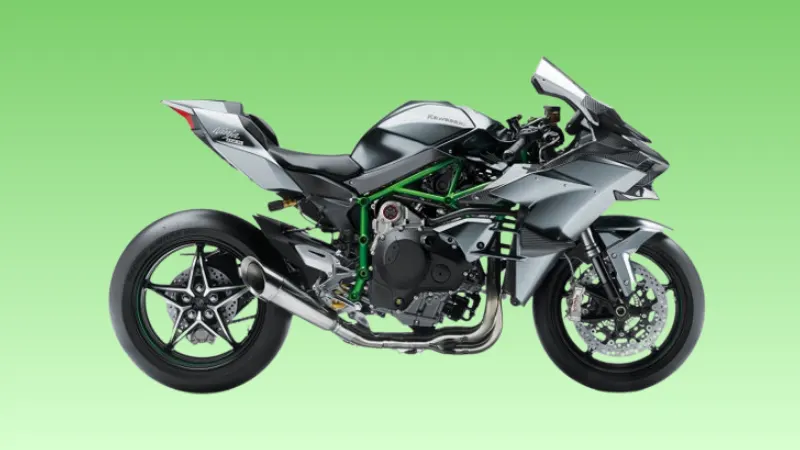
But what makes the Ninja H2 family especially interesting isn’t only the performance. It is the sound.
The inline-four engine produces an aggressive exhaust note, but the supercharger adds a distinctive high-pitched whine that rises with engine speed. This creates a soundtrack unlike that of conventional naturally aspirated superbikes.
The combination of exhaust roar, intake noise and supercharger whine gives the H2/H2R an almost futuristic personality.
For many enthusiasts, this makes the Ninja H2/H2R the most technically distinctive entry in the Best-Sounding Kawasaki Motorcycles lineup.
Key Sound Character
- 998cc supercharged inline-four
- Distinctive supercharger whine
- Aggressive exhaust note
- Futuristic and highly recognizable soundtrack
How Kawasaki Engine Configurations Affect Sound
One of the most interesting aspects of this list is how different each motorcycle sounds despite coming from the same manufacturer.
The H2 Mach IV 750 uses a two-stroke triple, creating a sharp and raspy exhaust note. The ZX-7R and ZX-10R use inline-four engines, producing a smoother and more intense high-RPM scream.
The Z900RS takes the inline-four formula and gives it a more relaxed, retro character. Meanwhile, the Ninja H2/H2R adds forced induction to the equation, creating the distinctive whine of a supercharger.
This variety is one reason Kawasaki has produced so many memorable motorcycles over the years.
Stock Exhaust vs Aftermarket Exhaust
An aftermarket exhaust can dramatically change a motorcycle’s sound. Many owners install performance exhaust systems to make their bikes sound deeper, louder or more aggressive.
However, louder doesn’t necessarily mean better.
A well-designed factory exhaust can provide a balanced combination of volume, tone and refinement. The Kawasaki Z900RS is a good example of a motorcycle whose factory exhaust complements its character particularly well.
For enthusiasts interested in preserving the original personality of a classic motorcycle, keeping the stock exhaust can also be valuable.
Any exhaust modification should also comply with local noise and emissions regulations.
Final Verdict of Best-Sounding Kawasaki Motorcycles
Kawasaki’s history demonstrates that great motorcycle sound can come from very different engineering philosophies. The H2 Mach IV 750 delivers the raw character of a legendary two-stroke triple, while the ZX-7R captures the unmistakable soundtrack of 1990s Japanese superbikes.
The ZX-10R takes the high-revving inline-four formula into the modern performance era, while the Z900RS combines retro styling with a refined four-cylinder soundtrack.
Then there is the Ninja H2/H2R, whose supercharged engine produces one of the most recognizable sounds in modern motorcycling.
Ultimately, choosing the Best-Sounding Kawasaki Motorcycles is subjective. Some riders will always prefer the raw rasp of a two-stroke, while others will choose the scream of an inline-four or the unusual whine of a supercharged engine.
What isn’t subjective, however, is Kawasaki’s ability to create motorcycles with strong mechanical personalities. These machines prove that the sound of a motorcycle can become just as memorable as its speed, styling and technology.
Frequently Asked Questions of Best-Sounding Kawasaki Motorcycles
Q1. What are the Best-Sounding Kawasaki Motorcycles?
A: The five motorcycles covered here are the Kawasaki H2 Mach IV 750, ZX-7R, Ninja ZX-10R, Z900RS and Ninja H2/H2R. Each has a distinctive engine and exhaust character.
Q2. Which Kawasaki has the most unique sound?
A: The Ninja H2/H2R arguably has the most unusual sound because its inline-four engine is combined with a supercharger, creating a distinctive high-pitched whine alongside the exhaust note.
Q3. Which Kawasaki motorcycle has a two-stroke engine?
A: The H2 Mach IV 750 uses a 748cc two-stroke inline-three-cylinder engine, giving it a sharp and recognizable exhaust sound.
Q4. Does the Kawasaki ZX-10R sound good in stock form?
A: Yes. Its high-revving 998cc inline-four produces an aggressive and increasingly intense soundtrack as engine speed rises.
Q5. Is the Kawasaki Z900RS loud?
A: The Z900RS has a satisfying factory exhaust note, but its character is more refined and deeper than the extremely aggressive sound of a track-focused superbike.
Q6. Why does the Ninja H2 sound different from other Kawasaki bikes?
A: The major difference is its supercharged engine. The supercharger adds a distinctive whine to the inline-four’s exhaust and intake sounds.