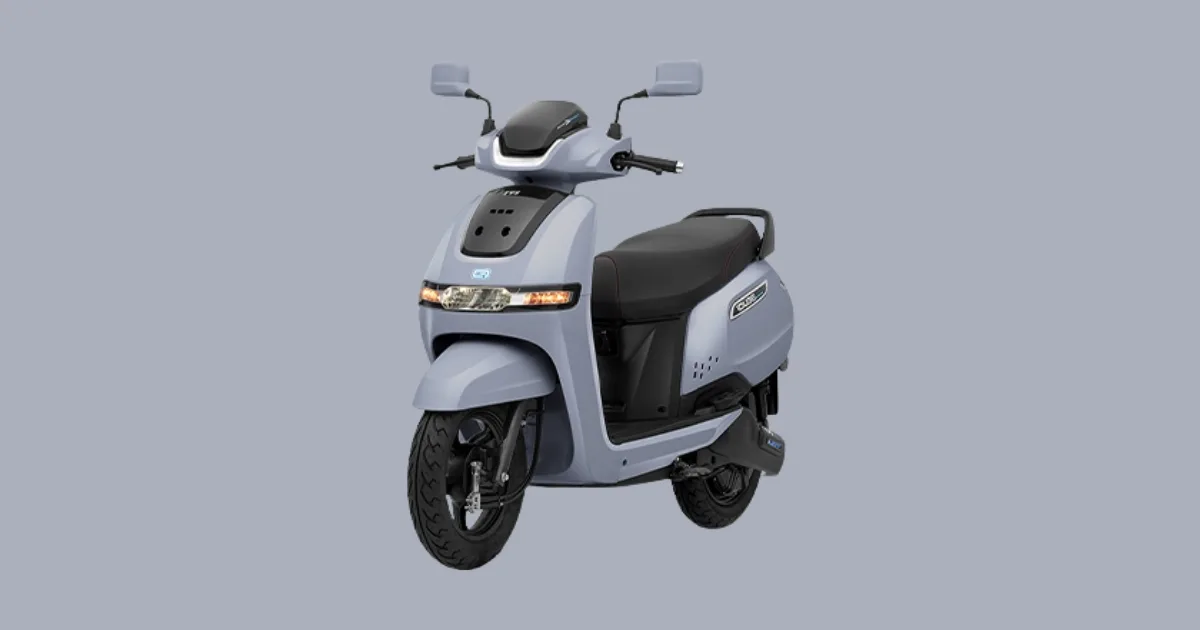
The Indian electric scooter market continues to expand, and TVS Motor Company has now updated the entry-level version of its popular TVS iQube. The company has replaced the previous 2.2kWh variant with a new TVS iQube 2.3kWh variant. Its biggest highlight is the larger battery pack and improved claimed range.
According to TVS, the new model offers a claimed IDC range of 114km on a single charge, which is 20km more than the 94km range offered by the outgoing 2.2kWh version.
Interestingly, despite the battery upgrade, TVS has not increased the starting price. The TVS iQube 2.3kWh is priced at ₹1.16 lakh ex-showroom in Bengaluru, excluding the PM E-Drive subsidy.
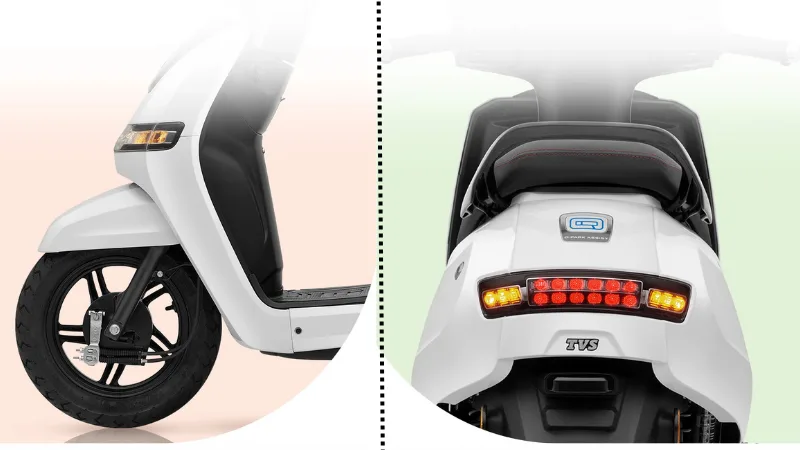
However, the range upgrade comes with a few compromises. TVS has reduced the motor output, top speed and acceleration, while the front disc brake has also been replaced by a drum brake.
So, the new iQube 2.3kWh is not simply a battery upgrade. Instead, it is a slightly different package aimed at buyers who prioritise range and everyday practicality over outright performance.
What’s New in the TVS iQube 2.3kWh Variant?
The biggest change is the battery pack. The outgoing entry-level iQube was equipped with a 2.2kWh battery, while the new model gets a 2.3kWh battery pack.
Although the increase in battery capacity may appear relatively small, TVS has significantly improved the scooter’s claimed IDC range.
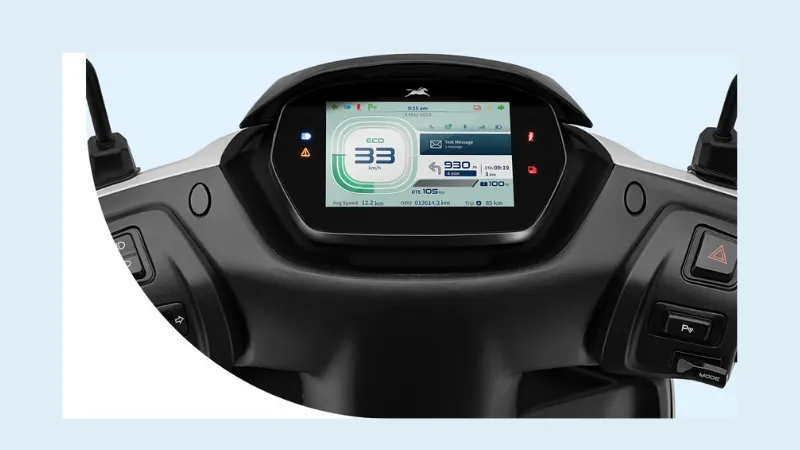
The outgoing model offered a claimed range of 94km, whereas the new TVS iQube 2.3kWh delivers a claimed 114km. This means riders get around 20km of additional claimed range on a full charge.
This upgrade could be particularly useful for customers who have longer daily commutes. Office commuters, students and urban riders who regularly cover more kilometres could benefit from the additional range and potentially need to charge the scooter less frequently.
However, it is important to remember that IDC range is based on certified testing conditions. Real-world range can vary depending on riding style, traffic, road conditions, rider weight, temperature and average speed.
Higher Range, But Reduced Motor Output
While improving the range, TVS has also made changes to the motor of the new entry-level iQube.
The TVS iQube 2.3kWh gets a 3.68kW motor, whereas other iQube variants continue to use a more powerful 4.4kW motor.
The reduction in motor output has a direct impact on performance. The new model has a claimed top speed of 68kmph, down from 75kmph on the previous 2.2kWh version.
For riders who frequently travel on open roads or prefer higher-speed riding, this reduction may be noticeable. However, for typical urban commuting, a 68kmph top speed should be adequate for most everyday situations.
This clearly shows that TVS has shifted the focus of the new entry-level variant from outright performance towards range and practicality.
ALSO READ: Yamaha New R2 Launched at Rs 2.30 Lakh: Variants, Features And Specs
0-40kmph Acceleration Is Also Slower
The reduction in motor power also affects acceleration.
The new TVS iQube 2.3kWh takes 4.7 seconds to accelerate from 0-40kmph, compared with 4.2 seconds for the outgoing 2.2kWh model.
In other words, the new model is around 0.5 seconds slower in this acceleration test. While this difference may not be significant during normal city riding, it could be noticeable when accelerating away from traffic signals or during quick overtakes.
For buyers looking for a relaxed and efficient city commuter, the difference may not be a major concern. But performance-focused customers may prefer one of the more powerful iQube variants.
Charging Time Has Increased Slightly
The larger battery pack has also resulted in a small change in charging time.
According to the available specifications, the new TVS iQube 2.3kWh takes around 2 hours 50 minutes to charge from 0 to 80 percent.
In comparison, the outgoing 2.2kWh model took approximately 2 hours 45 minutes for the same 0-80 percent charging cycle.
That is an increase of around five minutes, which is relatively small. For customers who value range more than charging speed, the additional claimed range could easily make up for this minor increase.
ALSO READ: Skoda Slavia Facelift 2026: Fresh Design, Turbo Engines And New 8-Speed AT
Front Disc Brake Replaced by Drum Brake
Another important hardware change on the new model is the front braking system.
The previous 2.2kWh variant came with a front disc brake, whereas the new 2.3kWh version gets a front drum brake.
This is an important point for buyers to consider, particularly those who place a high priority on braking hardware. A front disc brake can be more appealing to customers looking for a more premium braking setup.
That said, actual braking performance depends on several factors, including the overall brake setup, tyres, scooter weight and electronic systems. Therefore, buyers should ideally experience the scooter during a test ride before making a final decision.
Price Remains Unchanged
One of the biggest advantages of the new TVS iQube 2.3kWh is its unchanged price.
The scooter is priced at ₹1.16 lakh ex-showroom in Bengaluru, excluding the PM E-Drive subsidy. This is the same price point as the outgoing 2.2kWh model.
Therefore, customers are getting a larger battery and a higher claimed range without paying extra for the battery upgrade at the ex-showroom level.
However, the final on-road price can vary depending on the city, applicable subsidies, insurance, registration and other charges. Buyers should therefore check the latest on-road price and applicable government incentives with their local TVS dealer before purchasing.
Is the TVS iQube 2.3kWh Right for You?
The new TVS iQube 2.3kWh makes the most sense for buyers who prioritise range, affordability and everyday practicality.
If your primary usage involves city commuting and you regularly cover longer distances, the 114km claimed IDC range is the biggest advantage of this variant.
On the other hand, if you value faster acceleration, a higher top speed and a front disc brake, you may want to consider a more powerful iQube variant.
Ultimately, the right choice depends on what you expect from your daily ride. The new base model is designed more as a practical urban commuter rather than a performance-focused electric scooter.
TVS iQube 2.3kWh Specifications at a Glance
| Specification | TVS iQube 2.3kWh |
|---|---|
| Battery Capacity | 2.3kWh |
| Claimed IDC Range | 114km |
| Motor Power | 3.68kW |
| Top Speed | 68kmph |
| 0-40kmph | 4.7 seconds |
| 0-80% Charging Time | 2 hours 50 minutes |
| Front Brake | Drum |
| Price | ₹1.16 lakh* |
| PM E-Drive Subsidy | Not Included |
*Ex-showroom Bengaluru price as provided.
TVS iQube 2.3kWh vs Old 2.2kWh Variant
The changes become clearer when the two entry-level models are compared directly.
| Key Specification | Previous iQube 2.2kWh | Updated iQube 2.3kWh |
|---|---|---|
| Battery Capacity | 2.2kWh | 2.3kWh |
| Claimed IDC Range | 94km | 114km |
| Electric Motor Output | 4.4kW | 3.68kW |
| Maximum Speed | 75kmph | 68kmph |
| 0-40kmph Acceleration | 4.2 seconds | 4.7 seconds |
| 0-80% Charging Time | 2 hours 45 minutes | 2 hours 50 minutes |
| Front Braking Setup | Disc Brake | Drum Brake |
| Ex-Showroom Price | ₹1.16 lakh | ₹1.16 lakh |
The comparison shows the strategy behind the new model quite clearly. TVS has increased the range while keeping the price unchanged, but has reduced performance and made a hardware change to the front brake.
Should You Buy the New TVS iQube 2.3kWh?
The new TVS iQube 2.3kWh follows a straightforward strategy: give buyers more claimed range without increasing the starting price.
The larger 2.3kWh battery improves the claimed IDC range from 94km to 114km, while the ₹1.16 lakh ex-showroom price remains unchanged in Bengaluru. This makes the new variant attractive for customers who want a practical electric scooter for daily commuting.
However, it is important to understand the compromises. The motor output has been reduced to 3.68kW, the top speed has dropped to 68kmph, 0-40kmph acceleration is slower, charging takes slightly longer and the front disc brake has been replaced by a drum unit.
Therefore, the new model should not necessarily be viewed as a complete upgrade over the outgoing version. Instead, it is a range-focused entry-level variant.
For urban commuters who value efficiency, affordability and a longer claimed range, the new iQube 2.3kWh could be a compelling choice. But buyers who want stronger performance, quicker acceleration and a higher top speed should consider the more powerful iQube variants before making a decision.
Overall, the TVS iQube 2.3kWh is best suited to buyers who want more range at the same price and are willing to accept a modest reduction in performance.
Frequently Asked Questions
Q1. How Much Does the New TVS iQube 2.3kWh Cost?
A: The TVS iQube 2.3kWh is priced at ₹1.16 lakh ex-showroom in Bengaluru. The quoted price does not include the PM E-Drive subsidy.
Q2. What Range Does the New TVS iQube 2.3kWh Offer?
A: The new TVS iQube 2.3kWh has a claimed IDC range of 114km. This is 20km higher than the 94km claimed range of the outgoing 2.2kWh variant.
Q3. What battery does the TVS iQube 2.3kWh get?
A: The new entry-level model gets a 2.3kWh battery pack, compared with the 2.2kWh battery used in the previous entry-level version.
Q4. How Fast Can the New TVS iQube 2.3kWh Go?
A: The new model has a claimed top speed of 68kmph, compared with 75kmph for the previous 2.2kWh version.
Q5. How powerful is the TVS iQube 2.3kWh motor?
A: The new model uses a 3.68kW electric motor. Other iQube variants continue to get a more powerful 4.4kW motor.
Q6. How long does the TVS iQube 2.3kWh take to charge?
A: The scooter takes approximately 2 hours 50 minutes to charge from 0 to 80 percent, according to the provided specifications.